
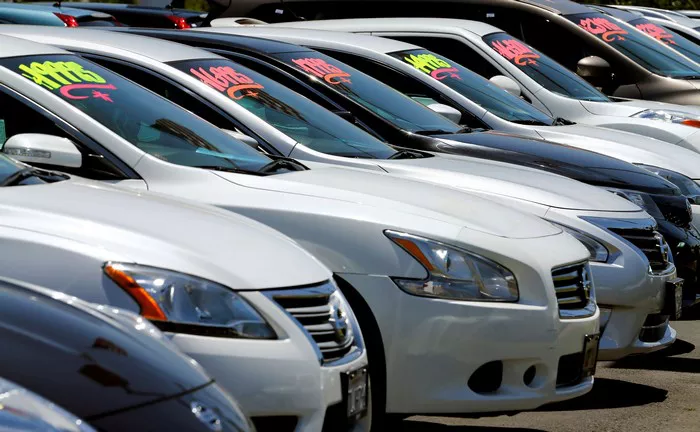
Korean used-car exporters are facing severe disruptions as the ongoing U.S.-Israel war against Iran has effectively blocked key sea routes through the Strait of Hormuz, halting shipments to the Middle East and triggering financial losses.
Abdullah Safia, 35, who runs a used-car export business at the former Songdo Amusement Park in Yeonsu District, Incheon, told ChosunBiz on March 6 that more than 20 vehicles are currently unable to be loaded for shipment. “The units I sent in December were scheduled to arrive in Dubai earlier this month, but they’ve been stranded in the Strait of Hormuz,” Safia said. “We are paying an additional $300 per container due to the delay.”
The blockade has intensified an already challenging export environment. Korean used-car companies are caught in a cycle of growing inventories, falling prices for export-bound vehicles, and mounting logistical expenses. “It’s adding insult to injury,” said several exporters, pointing to previous hurdles such as Libya’s currency collapse, Egypt’s import controls, and an influx of low-priced Chinese used cars in Syria and Jordan.
Since 2023, Dubai has become a major hub for Korean used-car exports, with the free zone offering safer transactions compared to other Middle Eastern markets. Vehicles exported to Dubai are often purchased by buyers from Iran, Saudi Arabia, and other neighboring countries. Last year, 65,749 used cars were shipped from Korea to Dubai, ranking it fourth among all export destinations. Overall, Middle Eastern countries accounted for more than half of Korea’s 123,241 exported used cars, valued at approximately 698.1 billion won, according to the Korea International Trade Association.
Companies clustered at the Songdo Amusement Park, where roughly 700 exporters operate, have been hit particularly hard. About 70% of these businesses rely on Middle Eastern markets. Tak Seong-yeol, head of Caravan Trade, said, “Before the Strait of Hormuz closure, we exported 150 to 200 vehicles monthly. Now, we manage barely one car per day. Vehicles purchased before the crisis are losing value, forcing us to sell at a loss.”
The war has also shifted demand patterns. Exporters report that buyers from Africa and West Asia are now more prevalent, and there is growing interest in one-ton trucks over passenger cars. Many vehicles at the Songdo complex remain unsent despite having “Sold Out” contracts, including a batch of 30 Mercedes-Benz cars intended for Dubai.
Used-car exporters are under regulatory pressure as well. Vehicle registration in Korea is canceled upon purchase for export, and vehicles must be shipped within a year. Failure to do so results in fines or forced scrapping, adding to the financial strain.
Beyond the current conflict, the Middle Eastern market has faced persistent challenges. Libya’s market has shrunk due to currency collapse, Egypt and Syria have imposed import restrictions, and prior regional conflicts—including the Israel-Palestine tensions in 2021-2022 and Yemen’s civil unrest in 2024—have previously dampened exports. Meanwhile, low-cost Chinese imports have undercut Korean vehicles in Syria and Jordan.
The export slowdown is also affecting the domestic auto parts market. With fewer vehicles being shipped, the demand for parts—often purchased alongside used cars for local repairs—has declined. Shin Hyeon-do, head of Used Car Research, warned, “Used cars were last year’s top export item for small and midsize enterprises. Without government intervention to address this international crisis, Korea risks losing another key export sector.”
