
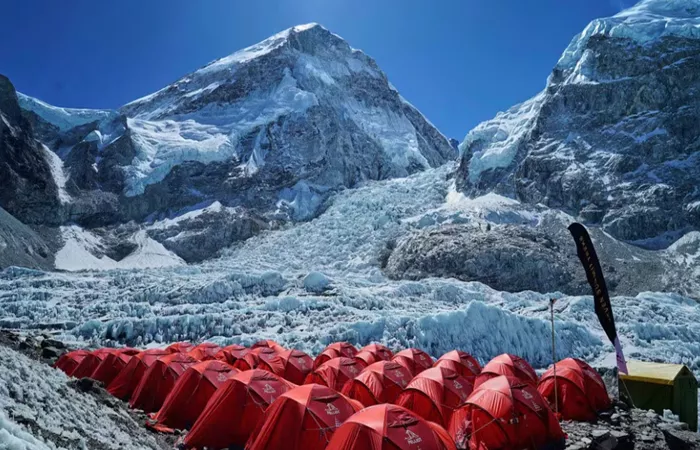
Around 410 climbers and an equal number of Nepali guides are stationed at Mount Everest’s base camp, preparing to ascend the nearly 8,850-meter peak during this month’s anticipated weather window.
Many arrived last month at the 5,300-meter base camp, but progress was stalled for over two weeks by a massive, unstable block of ice, or serac.
The Sagarmatha Pollution Control Committee (SPCC) deploys elite “icefall doctors” each year to establish the climbing route through the Khumbu Icefall, securing ropes and aluminium ladders over deep crevasses. Typically, this work is completed by mid-April, but this year the Icefall route opened only on April 29. SPCC issued a warning to climbers: the serac has multiple cracks and may collapse at any time, and all expedition operators and climbers should exercise extreme caution.
To mitigate risk, the newly dug trail passes beneath the serac. The serac is part of the Khumbu Icefall, a constantly shifting glacier characterized by deep crevasses and towering ice formations, some as large as ten-story buildings. It remains one of the most dangerous and technically challenging sections on the route to Everest’s summit.
Climbers, guides, and expedition teams are both eager and wary about the ascent. Lukas Furtenbach, a renowned mountain guide leading 40 international climbers, 11 guides, and 90 Sherpas, described the situation as serious. “Anyone who says they’re not concerned is either inexperienced or not paying attention,” Furtenbach said from base camp. “The serac is a real, objective hazard.”
Despite the risks, climbers continue preparations, balancing excitement with caution. The situation underscores the ongoing dangers of Everest’s early-season climbs and the critical role of expert guides in navigating its shifting ice formations.
Authorities and expedition leaders continue to monitor conditions closely, emphasizing safety and adherence to established climbing protocols.
Related topics:
