
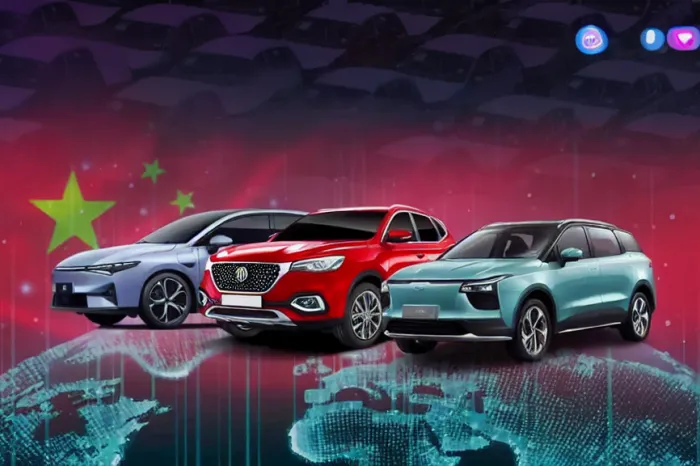
The luxury car market is witnessing a significant shift as Chinese manufacturers emerge as serious contenders, challenging traditional leaders from Germany, Japan, and Britain. For years, American buyers have favored overseas brands for executive sedans and high-end SUVs, often overlooking China due to its reputation for budget electric vehicles. However, this perception is rapidly changing as Chinese companies introduce sophisticated luxury cars equipped with cutting-edge technology.
Chinese automakers like Nio, Hongqi, Zeekr, Denza, and Yangwang are redefining what luxury means in the automotive world. These brands focus on innovative electrification, smart software integration, advanced chassis designs, and premium interior experiences that rival or even surpass established competitors. Nio’s ET9 model exemplifies this trend with its impressive all-wheel-drive system, 900-volt electrical architecture, active hydraulic suspension, and a luxurious four-seat cabin featuring a 35-speaker audio system.
Hongqi stands out by blending traditional luxury with cultural heritage. Its Guoya limousine is a large, stately vehicle inspired by imperial Chinese design elements and offers a powerful V8 hybrid engine. This approach contrasts with the more tech-driven strategies of other brands but highlights China’s confidence in presenting a unique vision of luxury that reflects national pride.
Other companies like Zeekr and Denza expand the range of luxury offerings. Zeekr’s 009 Grand is an ultra-luxury four-seat MPV packed with high-tech features such as a 43-inch mini-LED partition screen and an 18-liter refrigerator with heating and cooling functions. Denza plans to launch the Z9 GT in Europe in 2026, featuring rapid charging capabilities up to 1,500 kW and options for fully electric or hybrid powertrains. Yangwang’s U8 Premium Edition pushes performance boundaries further with a 1,200-horsepower output and unique abilities such as tank turns and emergency flotation.
Despite these advances and growing international presence—Nio operates sales networks in over two dozen countries—Chinese luxury cars remain largely unavailable in the United States due to political and market barriers. This limits American consumers’ access to some of the most innovative vehicles emerging globally. Meanwhile, Europe, the Middle East, and parts of Asia are increasingly receptive to these new entrants.
The rise of Chinese luxury car brands signals a broader transformation in the global automotive landscape. These companies are not merely creating one-off showcase models but are building comprehensive premium ecosystems that emphasize performance, technology, design, and cultural identity. Their growing exports demonstrate confidence in their products’ quality and appeal.
In summary, Chinese automakers have moved beyond their early roles as imitators to become pioneers in electric vehicle technology and luxury automotive experiences. As they continue to expand internationally, they challenge established brands by offering vehicles that combine advanced engineering with distinctive style and innovation. The global market is beginning to take notice of this new force reshaping luxury cars worldwide.
