
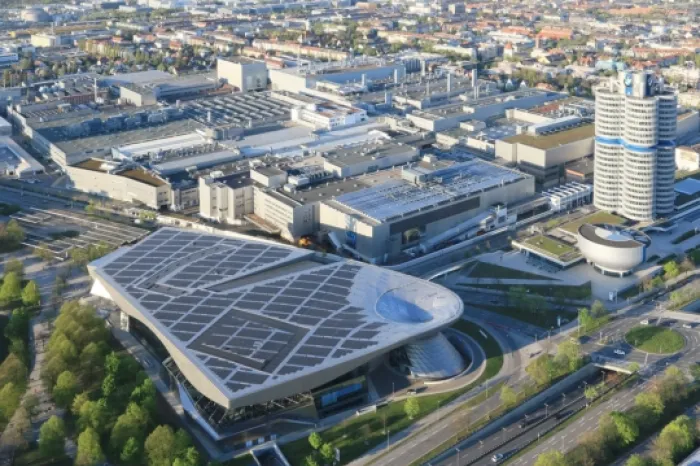
BMW Group is marking a significant milestone with the transformation of its Munich plant into a state-of-the-art facility focused exclusively on electric vehicle production. Starting in August 2026, the plant will begin series production of the new BMW i3, a key model in BMW’s Neue Klasse range, signaling the company’s shift toward fully electric vehicles by 2027.
The Munich plant, which has over a century of history, has undergone extensive modernization to increase efficiency, flexibility, and digital integration. The transformation is part of BMW’s broader BMW iFACTORY initiative that emphasizes efficiency, sustainability, and advanced digital technologies across its global production network. This strategic overhaul includes investments of around €650 million aimed at preparing the plant for the demands of electric mobility and future Neue Klasse models.
Key upgrades include a new body shop equipped with approximately 800 industrial robots that handle most joining processes with a 98 percent automation rate. The paint shop has also been modernized with AI-assisted surface inspection and energy-efficient technologies such as an electrically powered eRTO process for air purification. Additionally, the assembly area now supports fully digital workflows with live tracking and automated quality checks to assist employees.
Logistics at the Munich plant have been revamped to improve efficiency through direct delivery systems that reduce internal transport distances. Innovative multi-story structures allow parts to be moved via conveyor technology directly to assembly workstations. Automation plays a major role here as well, with driverless transport systems and smart robots expected to handle around 60 percent of supply tasks in the near future.
A unique feature of this facility is its in-house seat manufacturing unit, which serves as both a quality benchmark and innovation hub within BMW’s global production network. This “plant inside a plant” produces seats just in sequence for all Munich-produced models and tests new materials and manufacturing methods.
The transformation also benefits from BMW’s regional supply chain integration. High-voltage Gen6 batteries manufactured in Irlbach-Straßkirchen, Bavaria, are delivered directly to Munich for installation in the BMW i3. Meanwhile, e-motors are produced at BMW’s Steyr plant in Austria using advanced cleanroom environments and new production lines.
BMW executives highlight the importance of workforce dedication in achieving these ambitious goals. The company expects that by starting production of the BMW i3, overall costs at the Munich plant will decrease by an additional 10 percent compared to current vehicle generations. This is attributed to optimized processes, automation, digitization, and the efficient Neue Klasse vehicle architecture.
With this transformation, BMW is securing the future viability of its historic Munich site while setting new standards for electric vehicle production worldwide. The company’s approach demonstrates how traditional automotive manufacturing can successfully evolve to meet the challenges of sustainable mobility.
