
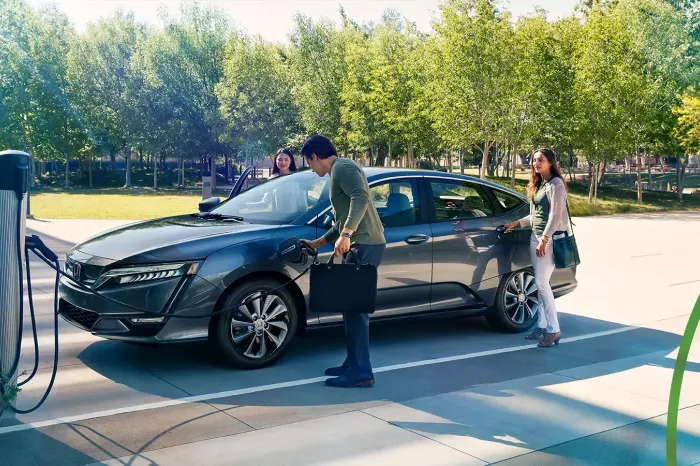
Car buyers today face a challenging market with rising prices for new vehicles and increasing fuel costs. Even car dealers acknowledge that new cars are becoming too expensive for many shoppers. At the same time, gas prices continue to climb, surpassing the high levels seen in 2022. Electric vehicle (EV) owners are also struggling as a $5 billion federal program aimed at expanding EV charging infrastructure is at risk, which may delay improvements needed for widespread EV adoption.
In this difficult environment, used plug-in hybrid electric vehicles (PHEVs) have emerged as a practical alternative. These vehicles combine a traditional gasoline engine with an electric battery that can be recharged by plugging in, allowing some driving on electric power alone. Unlike full EVs, PHEVs can switch to gasoline once the battery is depleted, eliminating concerns about finding charging stations during longer trips.
To understand the benefits of used PHEVs, consider the Jeep Wrangler 4xe. Although Stellantis plans to stop producing plug-in hybrids after 2025, this model highlights their efficiency advantages. The 2025 Jeep Wrangler 4xe features a 2.0-liter turbocharged engine paired with a 17.3 kWh battery. It offers an EPA-rated fuel economy nearly identical to the gas-only Wrangler (20 mpg vs. 21 mpg). However, it also provides an electric-only range of 21 miles, allowing drivers to avoid using gasoline during short trips. Over five years, this can save about $2,750 in fuel costs compared to the conventional version.
Luxury models like the Mercedes-Benz GLC 350e 4Matic offer even greater savings. With a larger 23.3 kWh battery and a turbocharged 2.0-liter engine, this plug-in hybrid delivers around 54 miles of electric driving and achieves 25 mpg combined on gasoline. This translates into approximately $5,500 saved on gas expenses over five years compared to its non-plug-in counterpart.
While used PHEVs retain value better than many new EVs—which have been observed to depreciate rapidly, sometimes losing $600 daily—their resale prices still make them more affordable options than new vehicles. For example, a 2021 Jeep Wrangler 4xe originally priced at $47,995 now sells for about $22,700 after five years, making it thousands of dollars cheaper than new models. Similarly, the Toyota RAV4 Prime shows a depreciation of nearly 35% over five years but remains competitively priced compared to new versions that cost over $41,000.
Despite their financial and practical advantages, plug-in hybrids have environmental drawbacks. Research indicates that PHEVs may produce emissions close to those of traditional gasoline cars—up to five times higher than initially expected—casting doubt on their green credentials.
In summary, used plug-in hybrids provide an attractive middle ground for consumers seeking to reduce fuel costs without fully committing to an all-electric vehicle. Their ability to drive on electric power for short distances while retaining gasoline backup makes them well-suited for current market challenges involving high car prices and uncertain EV infrastructure expansion.
