
A surprising number of used performance cars under $50,000 now rival the acceleration of vehicles that once defined the supercar category. Thanks to depreciation and modern engineering, extreme performance is more attainable than ever. We break down some of the fastest options currently available in the used market.
Performance Without the Supercar Price Tag
The notion that you need $200,000 or more to experience supercar-level acceleration is increasingly outdated. Over the past decade, advances in powertrain technology, traction systems, and electric torque delivery have dramatically lowered the cost of serious performance.
Today, careful shopping in the used market can put cars capable of 0–60 mph launches in under three seconds within reach of enthusiasts. A decade ago, that level of performance was reserved for Ferraris, Lamborghinis, and other high-end exotics. Rapid technological progress and vehicle depreciation have quietly created a unique opportunity for buyers.
Why This Matters Now
In the 1990s and early 2000s, supercar acceleration required exotic engineering and significant expense. Mainstream performance vehicles could not compete. Today, several production cars are fast enough that their used prices make them accessible to ordinary buyers.
Depreciation is a major factor. High-performance vehicles often lose substantial value in the first few years while retaining their mechanical capabilities. This has created an unprecedented performance-per-dollar opportunity.
A prime example is the Nissan GT-R. Early R35 models are now commonly available for around $50,000. When new, the GT-R was a game-changer, delivering supercar-level acceleration at a fraction of the cost of European exotics. Equipped with all-wheel drive, launch control, and a twin-turbocharged V6 producing roughly 480 horsepower, the GT-R could reach 60 mph in around three seconds.
Electric vehicles have also reshaped the acceleration landscape. The Tesla Model S, with its instant torque, demonstrated that even large luxury sedans can achieve extreme performance. In Ludicrous Mode, the Model S P100D can sprint to 60 mph in approximately 2.5 seconds.
Performance Compared to Traditional Supercars
To understand the value of these vehicles, consider the benchmarks they now rival. A mid-2000s Ferrari F430, once considered a supercar icon, achieved 0–60 mph in roughly four seconds. Today, several used cars under $50,000 can match or surpass that performance.
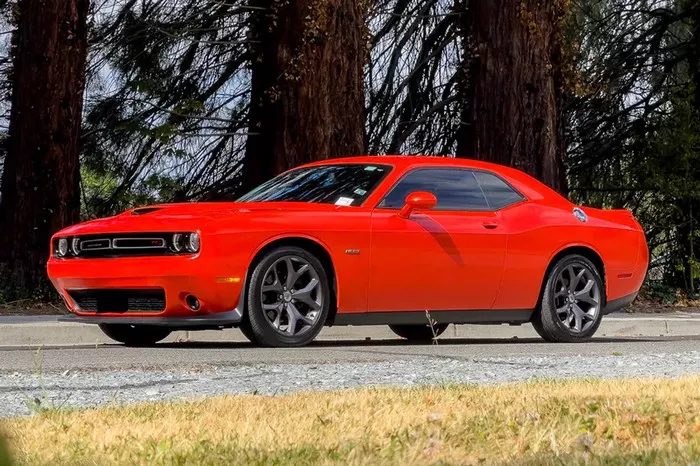
American muscle and sports cars dominate this segment. The Chevrolet Corvette Z06 (C7 generation) remains a standout bargain, with a supercharged 6.2-liter V8 producing around 650 horsepower, capable of reaching 60 mph in roughly three seconds. Similarly, the Dodge Challenger Hellcat leverages brute force from its 700+ horsepower supercharged V8, achieving extraordinary straight-line acceleration without relying heavily on electronics.
Luxury sedans are also part of this performance revolution. The BMW M5 Competition combines everyday usability with extreme acceleration, thanks to a twin-turbo V8 and an advanced all-wheel-drive system.
Who Should Consider These Cars
These vehicles appeal to enthusiasts seeking extreme performance without the exotic-car price tag. Many were engineered to handle demanding driving conditions, making them surprisingly durable when well maintained.
However, high-performance cars are not for everyone. They come with higher operating costs, including tires, brakes, insurance, and fuel consumption. Practicality can also be limited: while a BMW M5 can serve as a daily driver, cars like the Corvette or Challenger prioritize speed over comfort and convenience.
The Long-Term Impact
The rise of affordable high-performance used cars reflects a broader shift in the automotive industry. Technology once reserved for exotics has filtered down to mainstream production models, democratizing supercar-level acceleration.
Engineering advancements, improved traction systems, and electric powertrains have made extreme acceleration accessible at a fraction of the cost. As the market continues to evolve, enthusiasts will find more opportunities to experience supercar-level thrills without spending a fortune.
When a luxury sedan or muscle car can outpace a Ferrari from a decade ago, the definition of performance changes. Speed is no longer the exclusive domain of the ultra-wealthy—it is now within reach of determined enthusiasts willing to explore the used-car market.
