
The recent U.S. and Israeli conflict with Iran is driving renewed consumer interest in electric vehicles (EVs), echoing trends seen during Russia’s invasion of Ukraine in 2022, according to industry analysts.
Jessica Caldwell, head of Insights at Edmunds, notes that both geopolitical events caused spikes in fuel prices and uncertainty in the market, prompting buyers to consider EVs. “We have a model comparing the early stages of these events, both with no clear timeline for resolution,” Caldwell said.
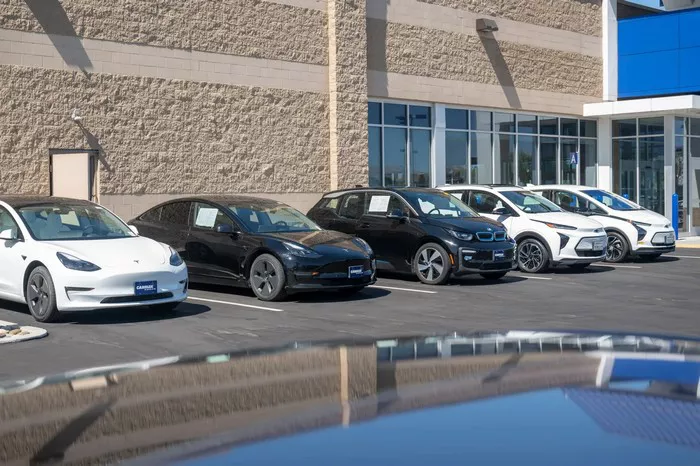
Before the conflict, expectations were that a surge of leased EVs returning to the market would create attractive deals for used buyers. Edmunds projects that battery electric vehicles (BEVs) will grow from 2% of lease returns in 2025 to 8% in 2026. Caldwell highlighted that the current crop of used EVs is more appealing than early models. “We’re looking at vehicles purchased in 2023. These EVs are substantially better than the compliance EVs from four years ago,” she explained.
During the 2022 Russian invasion, EV interest on Edmunds.com jumped from 17.5% to 25.1% of vehicle research activity as gas prices surged. Similarly, in the first week of March 2026—days after the U.S.-Iran conflict began—interest in EVs and hybrids climbed from 20.7% to 22.4%. Gas prices followed a sharp upward trend, with the national average for a gallon of regular gas reaching $3.63, and California hitting $5.42, according to AAA data.
Despite rising interest, the EV market faces headwinds. Federal tax credits have expired, interest rates are higher, and automakers have scaled back ambitious EV plans. Honda, for example, recently canceled development of three planned EV models for North America. Caldwell emphasized that sustained high gas prices would likely be needed to prompt a significant shift from gasoline-powered vehicles to EVs.
Local dealerships are already seeing a tangible impact. Greg Ostrowski, space manager at Polestar Detroit in Royal Oak, reported a 200% increase in showroom traffic, online inquiries, and sales since late February. “Any time gas prices rise, we see customers who previously drove trucks or large SUVs seeking more efficient vehicles,” he said.
Similarly, Jimmy Douglas, founder of Plug, a national EV wholesale auction platform, expects used EVs to become more affordable as inventory grows. “We anticipate a ‘tsunami’ of roughly 1.1 million units returning from leases over the next three years, in addition to existing vehicles in operation,” he said. Douglas also noted that provisions of the Inflation Reduction Act, which initially incentivized EV leasing, are now supporting a burgeoning used EV market.
Not all dealers share the same optimism. Eric Frehsee, president of The Tamaroff Group, which sells Nissan, Acura, Honda, and Kia vehicles in Southfield and Roseville, said EVs account for only 2% of his sales. He highlighted concerns about battery reliability after warranty expiration and limited consumer demand for pre-owned EVs. “It’s kind of buyer beware,” he said, contrasting EVs with traditional models like the Honda CR-V, which he stocks in large numbers across multiple trims and price points.
While rising gas prices and geopolitical uncertainty are pushing more Americans to explore electric and hybrid vehicles, the market remains niche, and consumer adoption will depend on incentives, vehicle availability, and confidence in long-term reliability.
