
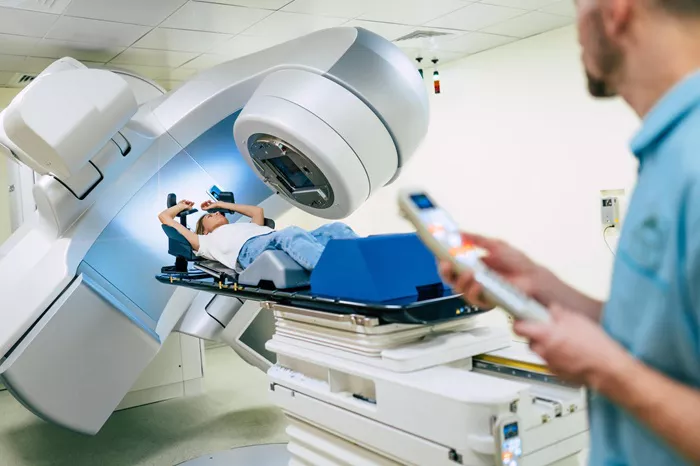
The FDA has approved Rybrevant Faspro (amivantamab and hyaluronidase-lpuj, Johnson & Johnson), a groundbreaking subcutaneous treatment for patients with EGFR-mutated non–small cell lung cancer (NSCLC). This new therapy offers the first and only option that can be given under the skin, cutting treatment time from several hours to just five minutes, while maintaining effectiveness across all previously approved indications for intravenous (IV) amivantamab.
“Patients now have a simpler, chemotherapy-free option that targets the disease more precisely and improves survival,” said Joelle Fathi, DNP, chief healthcare delivery officer at GO2 for Lung Cancer. “Rybrevant Faspro makes care faster, less invasive, and more focused on what matters most to patients: time, comfort, and dignity. It reduces the physical and emotional toll of long infusions, allowing patients to focus on living rather than treatment.”
Faster Treatment, Fewer Side Effects
The approval is based on results from the phase 3 PALOMA-3 study, which compared the subcutaneous (SC) version of amivantamab combined with oral lazertinib (Lazcluze) against the IV version plus lazertinib. Patients receiving the SC treatment experienced significantly fewer administration-related reactions (13% vs. 66%) and a lower risk of blood clots (11% vs. 18%). Most reactions were mild or moderate, and recommended preventive anticoagulation during the first four months helped safely reduce clot risk.
“The approval of Rybrevant Faspro is a major breakthrough for EGFR+ NSCLC patients who previously had limited treatment options,” said Biljana Naumovic, president of solid tumors at Johnson & Johnson Innovative Medicine. “It offers more accessible care along with tools to manage common skin-related side effects.”
Unexpected Benefits for Survival
The PALOMA-3 study also revealed unexpected advantages for the SC delivery. Patients on the subcutaneous regimen had a longer duration of response, improved progression-free survival, and notably higher overall survival compared to the IV group. After 12 months, 65% of SC patients were alive, compared with 51% of those receiving IV therapy.
A New Standard for First-Line Treatment
Amivantamab plus hyaluronidase-lpuj, in combination with lazertinib, is approved as a first-line therapy for adults with locally advanced or metastatic NSCLC driven by EGFR exon 19 deletions or L858R mutations. This combination works through a triple mode of action, targeting EGFR mutations, blocking MET, and engaging the immune system, which helps prevent resistance and extend survival. Previous studies project the regimen could deliver over four years of overall survival, offering patients a chemotherapy-free option with powerful results.
“Rybrevant Faspro changes how we approach EGFR-mutated NSCLC by preventing resistance and delivering unmatched survival while giving patients a more convenient, patient-focused experience,” said Danny Nguyen, MD, assistant clinical professor at City of Hope.
Related topic:
