
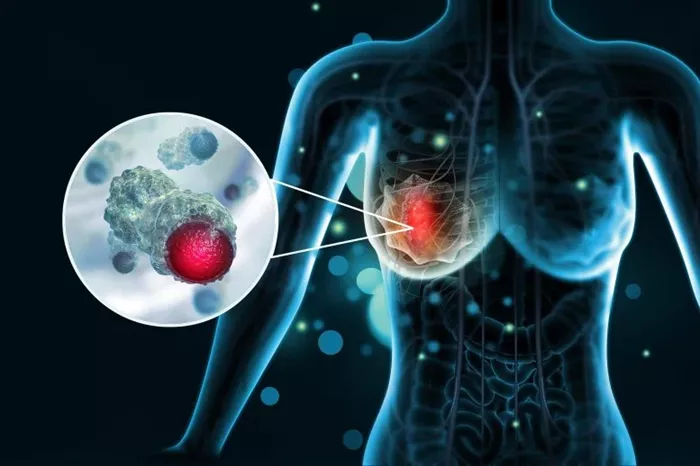
Researchers at Hiroshima University have uncovered a molecular mechanism that may help stop breast cancer cells from spreading, potentially opening the door to innovative treatments. The study focuses on how breast cancer cells grow and move to other parts of the body, even after the primary tumor is surgically removed.
The research, published in the British Journal of Pharmacology, examined a receptor called vasoactive intestinal peptide receptor-2 (VIPR2). This receptor normally helps regulate processes such as circadian rhythm, immune responses, and insulin release. Problems arise when VIPR2 is overproduced, allowing breast cancer cells to multiply faster and invade other tissues.
When VIPR2 levels are high, the receptor can pair with another copy of itself, forming a structure known as a homodimer. Co-corresponding author Satoshi Asano, an assistant professor at Hiroshima University’s Graduate School of Biomedical and Health Sciences, explained that dimerized receptors behave differently from single receptor units, known as monomers. The team aimed to understand how this pairing affects breast cancer progression.
In laboratory experiments and mouse models, the researchers confirmed that VIPR2 molecules directly connect to form homodimers. These receptor pairs promote tumor growth and metastasis through specific regions called transmembrane domains 3 and 4 (TM3 and TM4). The interaction between these domains either strengthens or prevents receptor pairing.
The team discovered that small chains of amino acids, called TM3-4 peptides, can disrupt the dimerization process. Cells expressing TM3-4 peptides showed that VIPR2 molecules moved further apart, reducing tumor growth and lymph-node metastasis. This process, known as de-dimerization, lowers the receptor’s involvement in signaling pathways that drive cancer cell proliferation and spread.
Yukio Ago, co-corresponding author and professor at Hiroshima University, noted that the TM3-4 peptides could form the basis of new anticancer drugs. The researchers plan to test purified TM3-4 peptides in animal models, with the goal of targeting breast cancer cells where VIPR2 dimerization is heightened. This discovery offers a promising strategy to combat tumor progression and metastasis in breast cancer patients.
