
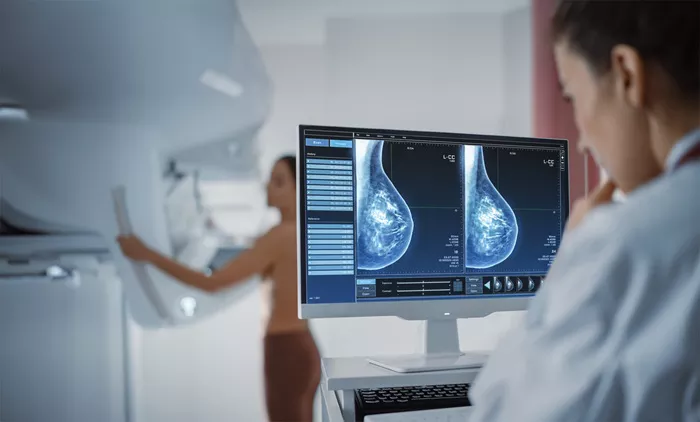
Hologic, Inc., a leader in women’s health technology, has revealed new data demonstrating the effectiveness of its AI-powered mammography solution in identifying breast cancers that were initially overlooked.
Mark Horvath, President of Breast and Skeletal Health Solutions at Hologic, emphasized the company’s commitment to innovation, stating, “This study underscores AI’s potential to detect cancers that may otherwise remain hidden, offering critical insights to guide future advancements in our technology.”
The study, published in the American Journal of Roentgenology, analyzed 7,500 digital breast tomosynthesis (3D mammography) screenings performed between 2016 and 2019 at Massachusetts General Hospital. Of the 100 false-negative cases, where breast cancer was missed initially but later diagnosed, the Genius AI Detection system flagged 32% of these as suspicious, pinpointing the areas where cancer was subsequently found.
The AI system also successfully identified nearly 90% of the 500 confirmed breast cancer cases, accurately localizing them. It showed a higher sensitivity for detecting invasive ductal carcinomas and lymph node-positive cancers, but was less effective in identifying invasive lobular carcinomas and grade I cancers.
A notable case in the study involved a 54-year-old woman whose initial mammogram was read as negative. Eleven months later, she returned with a lump in her breast and was diagnosed with grade 1 invasive ductal carcinoma. Retrospective analysis revealed that the AI had flagged the suspicious area on her original scan.
Dr. Manisha Bahl, MD, MPH, Associate Director of Quality for Breast Imaging at Mass General Brigham, praised the AI system, saying, “The AI not only flagged the case for further review but also accurately identified the location of the cancer. These findings are promising and highlight the transformative potential of AI in breast cancer detection.”
Study Limitations
This research, conducted at a single academic center with a predominantly Caucasian patient group, used Hologic’s Genius AI Detection 2.0 software. As such, the results may not be applicable to all settings or other AI-based algorithms. Additionally, certain subgroup sample sizes limited the statistical power of the analysis. The study did not evaluate the impact of AI on patient outcomes or its integration into routine clinical practice.
Hologic’s Genius AI Detection uses advanced deep learning algorithms to identify suspicious areas in mammograms, which are then flagged for radiologists to review. This technology leverages a large, diverse dataset, providing valuable insights to aid in breast cancer detection.
Related topic:
