
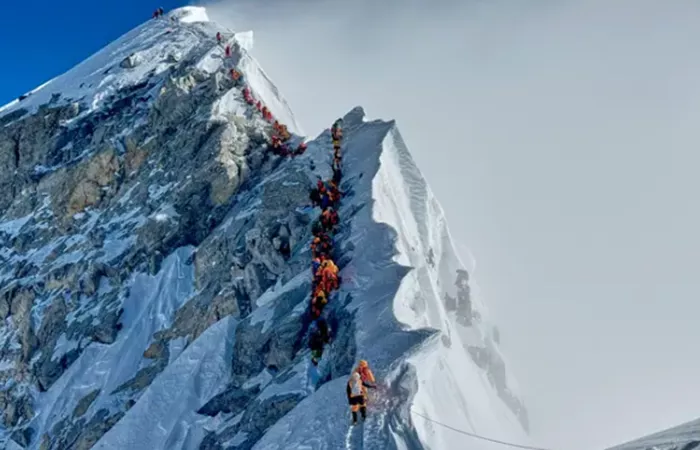
Despite high travel costs, increased permit fees, and a dangerously unstable ice block, hundreds of climbers are preparing to scale Mount Everest this season.
About 410 climbers and an equal number of Nepali guides are currently at base camp, ready to attempt the 29,000-foot summit during the prime weather window this month.
Climbers began arriving at the base camp, located at 17,340 feet, last month. However, a massive overhanging block of ice, known as a serac, halted progress for more than two weeks. Seracs are prone to sudden collapse, making this section of the climb particularly hazardous.
“Icefall doctors,” elite guides deployed by the Sagarmatha Pollution Control Committee (SPCC), are responsible for establishing the climbing route each year. They lay ropes and secure aluminum ladders over deep crevasses to create a navigable path. The SPCC opened the Icefall route on April 29 but issued a stern warning about the serac’s instability, urging climbers to exercise extreme caution.
The new trail passes beneath the overhanging ice, which remains a constant threat. The serac is part of the Khumbu Icefall, a shifting glacier with deep crevasses and towering ice formations that can reach the height of ten-story buildings. It is widely regarded as one of the most technically challenging sections of the ascent.
Renowned mountain guide Lukas Furtenbach, overseeing 40 international climbers, 11 guides, and 90 Sherpas, expressed concern over the current conditions. “Anyone who says they’re not concerned is either inexperienced or not paying attention. The serac is a real, objective hazard,” he said. Furtenbach noted that parts of the route are more exposed and complex than last year.
To mitigate risks, teams are reducing load sizes, minimizing exposure time, and carefully timing movements through the Icefall. Highly experienced Sherpas and guides are conducting thorough risk assessments to ensure climbers can navigate the treacherous terrain as safely as possible.
Related topics:
