
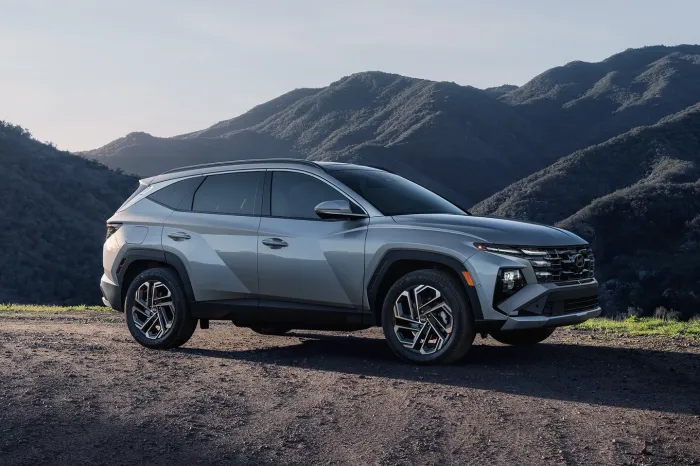
Hyundai is preparing to launch significant updates to its SUV range for the 2027 model year, introducing fresh designs and advanced interior technologies that promise to enhance the driving experience. Two of the brand’s key SUVs, the Santa Fe and Tucson, will receive notable facelifts and redesigns, reflecting Hyundai’s ongoing commitment to innovation and electrification.
The 2027 Hyundai Santa Fe facelift has been spotted in California, revealing both exterior and interior upgrades. The new model features vertical LED daytime running lights at the front and similarly styled vertical brake and indicator lights at the rear. Inside, the Santa Fe will be equipped with a large 17-inch PLEOS central touchscreen paired with a 9.9-inch digital cluster display above the dashboard, marking a significant step up in technology and user interface.
A standout feature of the updated Santa Fe is its Extended Range Electric Vehicle (EREV) powertrain. This hybrid system combines an electric motor with a gasoline engine that acts solely as a generator, extending driving range without sacrificing the smoothness of electric driving. This setup is expected to deliver over 900 kilometers of combined driving range and reduce running costs compared to traditional gasoline models. While technical specifics remain under wraps, it is likely that the powertrain will use a 2.5-liter turbocharged engine alongside a moderate-capacity lithium-ion battery.
Meanwhile, Hyundai is also redesigning the Tucson for 2027, with spy shots revealing a more rugged and boxy exterior inspired by the larger Santa Fe. The new Tucson will adopt Hyundai’s “Art of Steel” design language, replacing softer curves with sharper lines and muscular wheel arches. The front fascia features vertical LED turn signals, low-mounted headlights, and a horizontal LED light bar spanning the vehicle’s width. At the rear, slim vertical taillights are connected by a full-width LED light bar, giving the SUV a modern and distinctive look.
Inside, the Tucson’s cabin will receive major technology upgrades. It will feature a twin-screen setup with a massive 17-inch central touchscreen paired with a 9.9-inch digital instrument cluster. Running on Hyundai Motor Group’s Android-based Pleos Connect operating system, the interface is expected to offer smartphone-like usability, an integrated app store, and an AI assistant named “Gleo.” Despite these tech advances, physical knobs for key multimedia and climate controls will remain for ease of use.
Powertrain options for the Tucson are expected to continue focusing on hybrids and plug-in hybrids. The plug-in hybrid variant aims to extend its electric-only range up to approximately 62 miles. Additionally, there is speculation about a high-performance N model that could offer over 300 horsepower from an all-wheel-drive turbo-hybrid system.
These updates underline Hyundai’s strategy to diversify its electrification offerings while enhancing user experience through advanced technology and bold design. Both SUVs are anticipated to debut globally in late 2026 or early 2027, signaling Hyundai’s push toward combining style, performance, and sustainable mobility in its growing SUV portfolio.
