
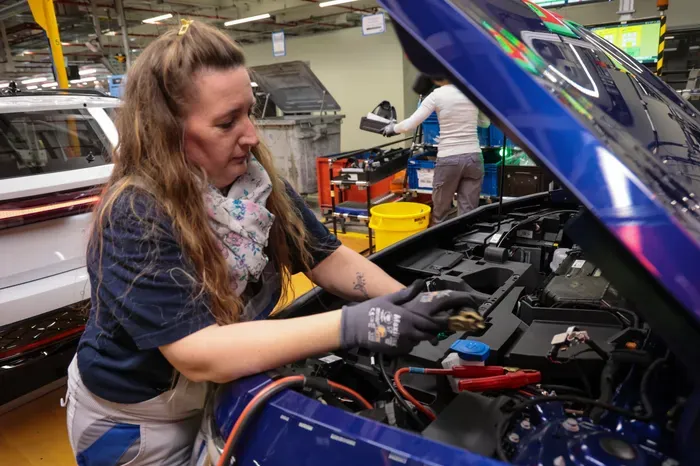
Volkswagen has announced that it will cease production of its ID.4 electric SUV at the Chattanooga, Tennessee, plant starting mid-April 2026. This decision marks a significant shift as the company redirects its manufacturing resources toward the new, second-generation Atlas SUV, a gasoline-powered vehicle that has been one of Volkswagen’s top sellers in the U.S. market for the past three years.
The move reflects broader challenges in the U.S. electric vehicle (EV) market, where demand has softened following changes to federal tax credits and shifting consumer preferences. Volkswagen plans to continue selling the remaining 2026 ID.4 inventory until it is depleted, which is expected to last into 2027. Despite ending local production, Volkswagen confirmed plans for a future version of the ID.4 to be introduced in North America, though specific details and timelines have yet to be revealed.
Volkswagen’s Chattanooga plant will focus on launching the all-new 2027 Atlas this summer, with vehicles arriving at dealerships in the fall. The Atlas has been a strong performer for Volkswagen in the U.S., and shifting production capacity to this model aims to meet current market demand more effectively. Employees who were previously assigned to ID.4 production will be reassigned within the plant based on seniority, with some eligible workers offered early retirement options.
The transition away from EV production at Chattanooga comes amid a wider pullback by several legacy automakers in their ambitious electric vehicle strategies. The elimination of the $7,500 federal EV tax credit last year significantly impacted sales of higher-priced electric models, including Volkswagen’s ID.4. While electric vehicles continue to grow globally—especially in Europe and China—demand in the U.S. remains uneven, with many consumers favoring gas-powered SUVs or more affordable EV options.
Volkswagen executives have emphasized that the company remains committed to its electric vehicle portfolio overall and is actively exploring new electrified models tailored for American consumers. There is speculation that Volkswagen may develop a new model specifically designed for the U.S. market, possibly including a compact pickup truck, to better align with local preferences and volume demands.
Despite criticism from environmental advocates who point out that shifting focus back to gasoline-powered SUVs like the Atlas increases fuel consumption compared to electric vehicles like the ID.4, Volkswagen states this strategy is necessary given current market realities. The company highlights its ongoing commitment to Chattanooga as a vital manufacturing hub for its U.S. operations and signals intent to adapt its product lineup to ensure long-term success in a competitive automotive landscape.
Overall, Volkswagen’s decision underscores the complexities automakers face balancing electric vehicle ambitions with consumer demand and economic conditions in the evolving automotive industry.
