
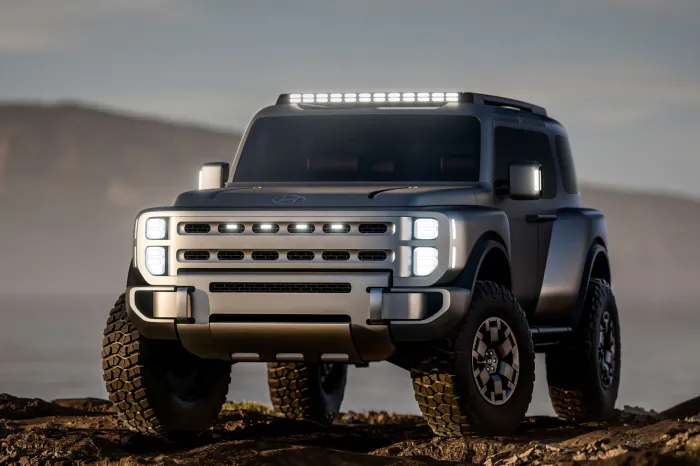
Hyundai has introduced the Boulder Concept, an SUV design study that previews the company’s first-ever body-on-frame vehicle platform, set to underpin a midsize pickup truck arriving by 2030. Revealed unexpectedly at the 2026 New York International Auto Show, the Boulder Concept marks Hyundai’s bold entry into the highly competitive midsize truck segment dominated by established American brands.
The Boulder Concept is built on a fully boxed ladder-frame platform, a construction style favored in the U.S. for its strength and durability, especially in off-road and heavy-duty applications. This new architecture will serve as the foundation not only for the forthcoming pickup but also for future rugged SUVs. Hyundai has emphasized that these vehicles will be designed, developed, and built in the United States using domestically produced steel, reflecting a strategic commitment to American customers.
Featuring an upright two-box silhouette, the Boulder’s design language is inspired by Hyundai’s “Art of Steel” philosophy, showcasing sculptural yet functional forms that highlight steel’s robust qualities. The exterior boasts aggressive off-road features such as oversized 37-inch mud-terrain tires, a double-hinged tailgate that opens from either side, a power drop-down rear window for carrying long items, and reflective tow hooks and door handles for visibility in low light. The concept also includes dual safari-style windows above its four doors and a low-profile roof rack with steel webbing designed to carry heavy loads.
Inside, the Boulder Concept offers a practical and adventure-ready interior. Durable materials are used throughout, with physical knobs and buttons for easy operation during rough driving conditions. Innovative fold-out tray tables provide convenience on the trail or worksite. The cabin’s design prioritizes visibility and connection to the outdoors, featuring large windows that flood the interior with light and allow passengers to enjoy their surroundings during off-road excursions.
Hyundai’s leadership has made it clear that body-on-frame vehicles represent an important growth opportunity in North America. Hyundai Motor Company President and CEO José Muñoz stated that body-on-frame trucks are central to American work and adventure lifestyles, and Hyundai aims to compete aggressively in this segment. The company plans to launch 36 new vehicles in North America by 2030, including this midsize pickup that will challenge established models like the Ford Ranger, Toyota Tacoma, and Chevrolet Colorado.
Brad Arnold, Chief Designer at Hyundai Design North America, highlighted that the Boulder Concept represents a new direction for Hyundai’s product portfolio. Unlike many crossovers that are essentially tall cars on unibody platforms, Hyundai intends to develop authentic body-on-frame trucks and SUVs offering superior towing capacity, off-road capabilities, and flexible packaging options for future electrification.
While still in early development stages, Hyundai’s new body-on-frame platform is expected to support various powertrain options including combustion engines, hybrids, and electric variants. The Boulder Concept’s rugged styling and practical features signal Hyundai’s serious intent to appeal to outdoor enthusiasts and pickup buyers seeking durability combined with modern design.
In summary, the Hyundai Boulder Concept is more than just an eye-catching SUV prototype; it represents a strategic milestone as Hyundai prepares to enter the body-on-frame truck market with vehicles designed specifically for American tastes and needs. With production models planned within the next few years, Hyundai is positioning itself as a strong contender in segments historically dominated by domestic automakers.
