
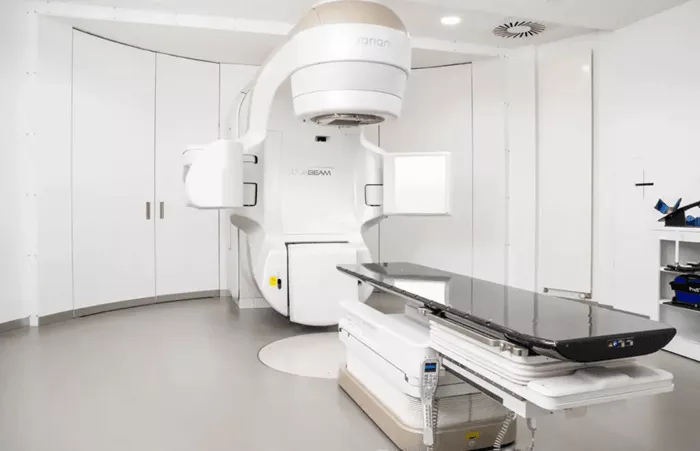
A nimotuzumab-based regimen paired with image-guided radiotherapy (IGRT) and brachytherapy demonstrated encouraging response and survival outcomes with manageable toxicity in older patients with locally advanced cervical squamous cell carcinoma (LACSCC), according to a phase 2 clinical trial published in the International Journal of Radiation Oncology, Biology, and Physics.
The single-arm, prospective study (NCT04976478) enrolled 118 patients aged 65 years or older with stage IB3 to IVA disease per FIGO 2018 criteria and an ECOG performance status of 0 to 2. Participants received weekly nimotuzumab at 200 mg for up to six weeks alongside IGRT and brachytherapy. Median follow-up was 24 months (95% CI, 21.78–25.53).
Researchers reported a complete response (CR) rate of 61.86% (95% CI, 53–71%) and a partial response (PR) rate of 29.66%, producing an overall response rate (ORR) of 91.53% (95% CI, 85–96%). An additional 3.39% of patients achieved stable disease, leading to a disease control rate (DCR) of 94.92%. Median disease-free survival (DFS) was 36.99 months. The 1- and 2-year DFS rates were 92.42% and 84.61%, respectively. Median overall survival (OS) was not reached, with 1- and 2-year OS rates of 96.19% and 88.22%.
“The addition of nimotuzumab to image-guided radiotherapy correlated with a clinically meaningful improvement in efficacy and survival, with an acceptable safety profile,” wrote lead author Ang Qu, MD, PhD, of Peking University Third Hospital, Beijing. “We will formally report three-year outcomes in the final analysis and plan a higher-level evidence trial to confirm these results.”
Treatment included image-guided intensity-modulated radiotherapy or volumetric modulated arc therapy, delivering 45 to 50.4 Gy in 25 to 28 fractions, escalated to 60 to 66 Gy for patients with nodal involvement. Brachytherapy followed with 6 Gy over 5–6 fractions or 7 Gy over 3–4 fractions, targeting a total high-risk clinical target volume (HR-CTV) dose of 80–85 Gy. All radiotherapy was completed within seven weeks.
The median patient age was 72 years (range, 65–92). Most had an ECOG performance status of 1, with a median tumor diameter of 40 mm and a median Charlson Comorbidity Index of 3.
Safety data showed any-grade adverse events (AEs) in all 73 patients and grade 3 AEs in 13. The most frequent any-grade AEs were leukopenia (64.4%), anemia (42.5%), diarrhea (38.4%), neutropenia (31.5%), nausea (19.2%), and reduced appetite (19.2%).
Grade 3 AEs included leukopenia (30.8%), anemia (23.1%), neutropenia (23.1%), lymphopenia (15.4%), and diarrhea (7.7%). No grade 4 toxicities occurred. One grade 5 infection led to death but was deemed unrelated to nimotuzumab. No drug-related severe events or deaths were reported.
The trial’s primary endpoint was DFS, with OS, CR rate, ORR, and safety as secondary endpoints. Investigators plan future confirmatory studies to further explore the role of nimotuzumab with IGRT in this older LACSCC population.
Related topics
