
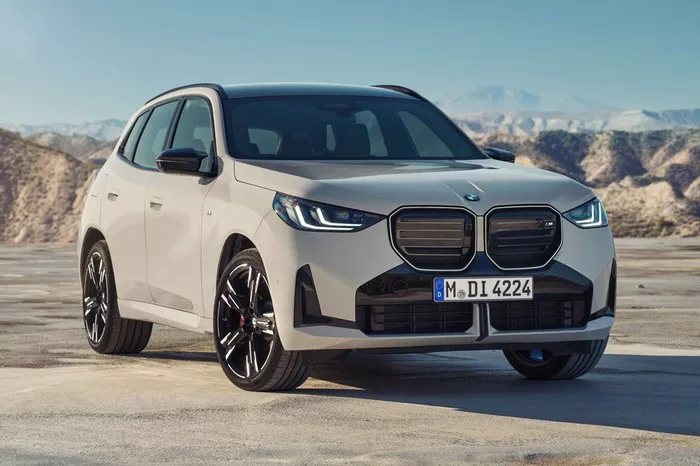
The BMW X3 enters the 2026 model year with a series of measured updates, strengthening its position as a well-rounded contender in the compact luxury SUV category. While the core design and performance formula remain largely unchanged, the latest iteration introduces practical enhancements aimed at improving everyday usability. Among them is a newly standard tire sealant kit, offered at no additional cost, designed to address punctures quickly and securely through a magnetized mounting system. Pricing for the 2026 X3 starts at $52,650, including destination charges.
Efficiency continues to be a defining characteristic of the X3 lineup. Both available powertrains are now equipped with 48-volt mild hybrid technology, which enhances fuel economy while maintaining responsive performance. The base variant delivers an estimated 29 miles per gallon combined, while the higher-performance model achieves 27 mpg combined. These figures position the X3 competitively against key rivals, including the Genesis GV70.
BMW offers the 2026 X3 in two distinct trims, catering to varying customer preferences. The entry-level X3 30 xDrive features 19-inch wheels and a well-appointed interior, including heated, power-adjustable sport seats, wood trim accents, and ambient lighting. Standard technology offerings include an integrated navigation system, wireless smartphone charging, and seamless compatibility with Apple CarPlay and Android Auto. A digital key function also enables drivers to unlock and start the vehicle using their smartphones.
For those seeking enhanced performance and additional premium features, the X3 M50 xDrive provides a more dynamic alternative. This variant upgrades to 20-inch wheels and includes a panoramic sunroof to enhance cabin openness, along with a standard heated steering wheel. Both trims offer further customization through optional features such as ventilated front seats, heated rear seats, and a Harman Kardon premium audio system.
The two models are distinguished by their powertrains. The X3 30 xDrive is powered by a turbocharged 2.0-liter four-cylinder engine producing 255 horsepower and 295 lb-ft of torque. In contrast, the M50 xDrive features a turbocharged 3.0-liter inline-six engine delivering 393 horsepower and 428 lb-ft of torque. Both configurations come standard with all-wheel drive and an eight-speed automatic transmission, supplemented by mild hybrid assistance to improve efficiency and responsiveness.
Safety and driver assistance technologies remain central to the X3’s appeal. Standard systems include forward collision warning, lane-keeping assist, and active blind-spot detection. Optional upgrades include a surround-view camera system for improved visibility and a semi-autonomous driving feature capable of hands-free operation at speeds of up to 40 mph on compatible roads.
In terms of market positioning, the X3 occupies a middle ground between entry-level and high-end luxury SUVs. It is priced below models such as the Jaguar F-Pace, Range Rover Velar, Maserati Grecale, and Porsche Macan, while sitting above more affordable alternatives like the Acura RDX, Cadillac XT5, and Lincoln Corsair. This strategic positioning reinforces its appeal to buyers seeking a balance of premium features, performance, and value.
Overall, the 2026 BMW X3 continues to offer a compelling blend of efficiency, technology, and refinement. With incremental updates and a competitive price point, it remains a strong choice for consumers in the compact luxury SUV segment.
