
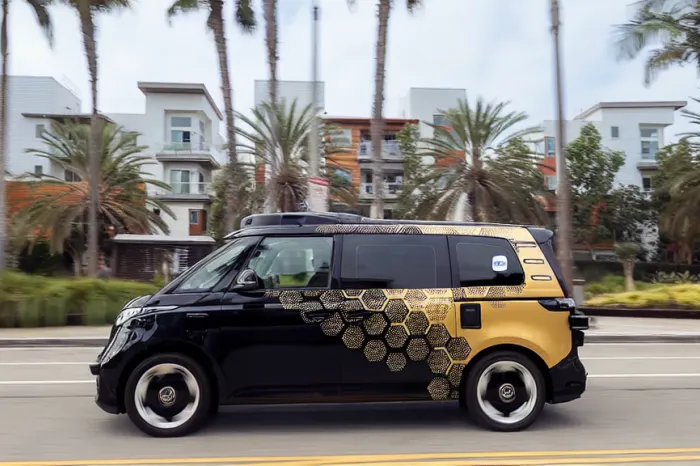
Volkswagen’s autonomous vehicle subsidiary MOIA America and ride-hailing giant Uber have started on-road testing of self-driving ID. Buzz minibuses in Los Angeles. This marks the first phase of a multi-city rollout planned over the next decade, aiming to offer commercial rides with safety operators by the end of 2026 and fully driverless services by 2027. The pilot program currently involves about 10 autonomous ID. Buzz vehicles operating on city streets under close supervision.
The autonomous version of the ID. Buzz differs significantly from the consumer model sold in showrooms. It features a comprehensive sensor suite including 13 cameras, nine LiDAR units, and five radars, all managed by Mobileye’s Drive platform. This partnership with Mobileye provides the vehicle’s software, hardware components, and digital mapping capabilities after Volkswagen ended its previous collaboration with Argo AI in 2022. The production vehicle can seat up to six passengers and includes powered sliding doors, making it suitable for ride-sharing services.
MOIA America plans to scale the fleet to over 100 vehicles during the testing phase before opening commercial service. Each test vehicle currently has a human safety operator on board to meet California’s strict regulatory requirements. The company is seeking permits from both the California Department of Motor Vehicles and the California Public Utilities Commission, which are necessary for charging passengers and operating driverless services.
Los Angeles was chosen as the launch city due to its rich automotive history and openness to new mobility technologies. Paul DeLong, MOIA America’s president of commercialization, emphasized the strategic partnership with Uber as key to reaching millions of potential riders through an established platform. Uber contributes its global dispatch and logistics infrastructure, while Volkswagen provides the autonomous vehicle technology.
Uber has been expanding its autonomous vehicle partnerships worldwide, including deals with companies like Rivian, Lucid, Nuro, and Waymo. Beyond vehicles, Uber is investing over $100 million in building dedicated charging hubs and maintenance depots for autonomous fleets in cities such as Los Angeles, San Francisco, and Dallas. These efforts aim to support a future where many rides are provided by fully driverless cars.
The ongoing tests in Los Angeles will inform further development and regulatory approval processes ahead of planned commercial launches. MOIA’s prior experience operating ride-pooling services in European cities like Hamburg provides valuable data to refine both vehicle design and service models. With ambitious targets to deploy hundreds of autonomous vehicles in Los Angeles by late 2027 and expand nationwide thereafter, Volkswagen and Uber are positioning themselves at the forefront of autonomous urban mobility.
