
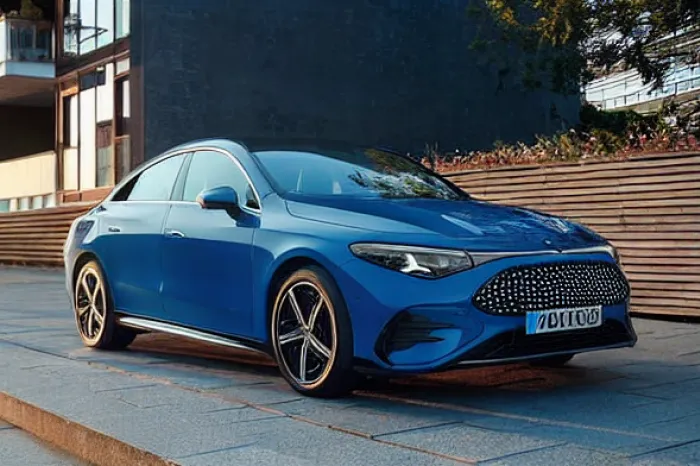
As the luxury electric vehicle (EV) market in China evolves in 2026, foreign automakers are adopting varied strategies to maintain relevance and compete with rapidly advancing local brands. German luxury carmakers like Porsche, Mercedes-Benz, BMW, and Audi are adjusting their approaches amid shifting consumer demands and technological advancements.
Porsche and Mercedes-Benz are taking more cautious and pragmatic steps. Porsche has been reducing its dealer network in China from 150 to a target of 80 by the end of 2026, focusing on “quality over quantity” rather than volume. This strategy comes after Porsche’s sales in China declined by over 50% since 2021, with revenue and profits also falling sharply due to restructuring and technology costs. Despite scaling back its sales channels, Porsche is investing heavily in local research and development with a dedicated team in Shanghai to speed up localized innovations and explore partnerships with Chinese intelligent-driving technology suppliers.
Mercedes-Benz, meanwhile, is adjusting its product strategy by balancing electric vehicles (EVs) with internal combustion engine (ICE) models instead of pursuing an all-electric future as aggressively as before. The company plans to launch over 15 new or refreshed models in China this year, including six pure electric versions. Mercedes is also pushing the idea of “equal intelligence” across both ICE and EV models by integrating advanced driver assistance systems and AI-powered cockpits uniformly across its lineup. This reflects a strategic shift to meet diverse consumer preferences while deepening cooperation with tech firms like Momenta to enhance intelligent driving capabilities.
In contrast, BMW and Audi are accelerating their efforts to capture market share through innovation and product expansion. BMW introduced the new-generation i3 sedan based on its Neue Klasse platform featuring advanced eDrive technology and ultra-fast charging capabilities that rival leading Chinese EV startups. The company also plans localized versions of key models like the iX3 for China, aiming to combine European electrification expertise with local consumer insights. Leadership changes at BMW further signal a push to strengthen its presence in the Chinese EV market.
Audi is leveraging a strategic partnership with Huawei to integrate cutting-edge intelligent driving technologies across its electric and combustion platforms. This collaboration aims to boost Audi’s competitiveness by combining Huawei’s software strengths with Audi’s mechanical tuning for an enhanced driving experience. Audi’s comprehensive product rollout includes eight new models spanning ICE, plug-in hybrid, and pure electric vehicles. Organizational shifts within Audi also indicate a focus on adapting quickly to China’s fast-changing market landscape.
The overarching theme for these foreign luxury brands is their fight to redefine “true luxury” in an era where technological experience increasingly drives consumer choice. While traditional brand prestige remains important, Chinese consumers now prioritize advanced driver assistance, seamless digital interfaces, fast charging, and extended range as markers of luxury. Local premium brands like Li Auto, NIO, and AITO are rapidly gaining ground by meeting these expectations with innovative smart EVs.
This changing market dynamic has forced foreign automakers to rethink their strategies carefully. Porsche’s channel reduction, Mercedes’ balanced portfolio approach, BMW’s platform renewal, and Audi’s tech partnerships all represent tailored responses based on each brand’s strengths and challenges. Their shared goal is clear: survive intense competition in China by aligning with local consumer preferences and technological trends.
Meanwhile, outside China, the luxury EV market faces different pressures. In the United States, for example, Toyota has unexpectedly emerged as a major competitor by offering affordable and reliable electric vehicles like the bZ crossover. Toyota’s 79% sales increase in early 2026 contrasts sharply with declines among other brands such as Ford’s Mustang Mach-E. This suggests that American consumers currently favor practicality over expensive luxury EVs.
Overall, 2026 marks a pivotal year for luxury EV makers worldwide as they navigate shifting demand patterns and fierce competition from both established brands and new entrants focused on technology-driven value propositions.
