
Volkswagen Group has deepened its collaboration with Chinese electric vehicle (EV) manufacturer Xpeng, signaling a significant shift in the global automotive industry’s technology landscape. While Volkswagen has long maintained joint ventures in China since the 1980s, its recent partnerships reflect a growing reliance on Chinese firms for advanced software and hardware development. This move underlines how Chinese companies are rapidly outpacing many Western automakers in producing connected and software-defined vehicles.
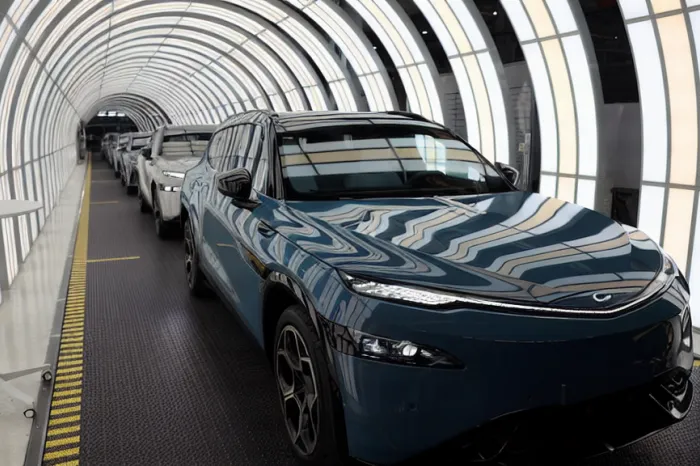
Xpeng, known for its cutting-edge technology, is playing a crucial role in helping Volkswagen develop new vehicle platforms in China. The two companies co-developed the ID.UNYX 08 model, which was brought to production in just 24 months — a pace notably faster than typical Western automakers’ three-to-five-year development cycles. Moreover, Volkswagen will be the first customer for Xpeng’s VLA 2.0 automated driver assistance system, which experts say could match or surpass offerings from other global manufacturers.
Volkswagen’s shift toward partnerships with Xpeng contrasts with its approach outside China, where it collaborates with U.S.-based Rivian for software and hardware. However, analysts point out that Chinese companies like Xpeng have already advanced further in areas such as chip design and software integration. This creates competitive pressure not only within China but potentially on a global scale as Chinese EV makers expand their market reach.
In recent years, Volkswagen has faced challenges maintaining its market share and profitability in China. In 2025, profits from the Chinese market dropped by approximately 45 percent, reflecting intense competition from domestic automakers that better understand local consumer preferences. Chinese buyers increasingly demand vehicles integrated with digital services that allow seamless connectivity and interaction similar to smartphones, a feature that many Western-made vehicles struggle to match.
The partnership between Volkswagen and Xpeng is part of a broader industry trend where legacy automakers recognize the need to leverage external innovation rather than develop complex software ecosystems entirely in-house. Volkswagen’s experience demonstrates the difficulty of building competitive software capabilities internally and highlights the strategic importance of collaborating with technologically advanced partners.
Looking ahead, the evolving relationship between Volkswagen and its partners raises questions about the future balance of power in automotive manufacturing. Experts warn that if Chinese companies continue to lead in producing high-value components such as software and autonomous driving systems, traditional carmakers might become more like contract manufacturers rather than technology leaders. The long-term success of such collaborations could reshape the global automotive supply chain and redefine which companies set industry standards.
As geopolitical tensions influence trade policies and market access, Volkswagen’s dual approach—working with Xpeng in China and Rivian elsewhere—reflects a pragmatic strategy to navigate complex international environments. However, the rapid technological advancements by Chinese EV firms underscore an emerging challenge for Western automakers to stay competitive amid shifting consumer demands and innovation frontiers.
