
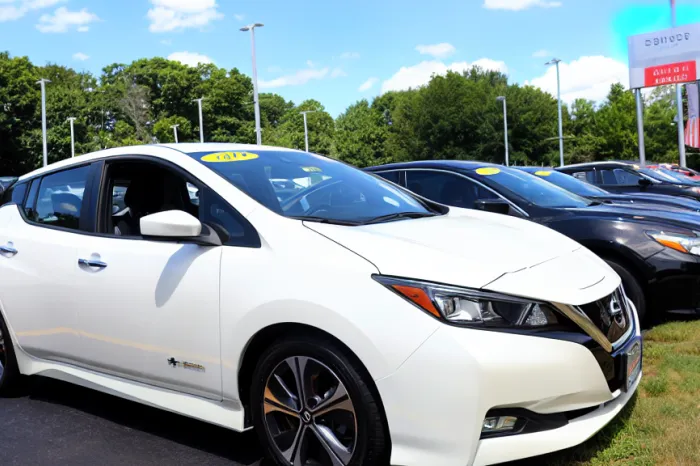
Electric vehicle (EV) sales in the domestic market reached a historic high last month, driven by new subsidies, price reductions, and the launch of fresh models. According to the Korea Automobile & Mobility Association (KAMA), new EV registrations hit 35,693 units in February, marking a 172% increase compared to the same month last year when sales stood at 13,128 units. This figure also surpasses the previous monthly record of 28,519 units set in September of last year by 25%. Meanwhile, registrations for gasoline and diesel vehicles dropped by 27.8% and 57.1%, respectively, and hybrid vehicle sales decreased by 10.4%. February is typically an off-season for car sales due to fewer business days, making this surge particularly remarkable.
The main driver behind this growth is the revamped subsidy system. The newly introduced “EV Transition Support Fund” offers an additional subsidy of up to one million Korean won to buyers who trade in internal combustion engine vehicles older than three years for an EV. Since September last year, EV purchases have been eligible for national subsidies without needing local government funds. Early announcement of subsidy guidelines in January prompted a rush among consumers to secure these benefits. By late February, nearly one-fifth of local governments had already used up their subsidy quotas.
Price competition has also played a significant role. Tesla’s decision to cut prices on its Model 3 Performance by 9.4 million won encouraged other manufacturers like Kia and Hyundai to reduce prices on popular models such as the EV5 Long Range, EV6, Ioniq series, and Kona Electric. Chinese manufacturer BYD further intensified competition with its low-priced “Dolphin” EV starting at 24.5 million won. The introduction of new models also boosted sales; Kia’s PV5 alone sold over 14,000 units in February, becoming the first domestic EV model to exceed 10,000 monthly sales.
Kia and Hyundai dominated the market with combined sales accounting for about two-thirds of total new EV registrations. Market watchers note that rising international oil prices caused by Middle East tensions may accelerate consumer interest in electric vehicles. Used car platforms have reported a 24% increase in inquiries for eco-friendly used vehicles since late February.
Despite the strong growth, experts warn that demand might decline once subsidies are exhausted. KAMA highlighted that major countries like China, Germany, and the UK continue to expand or reintroduce EV incentives to sustain momentum. Some local governments are already considering additional budget allocations to meet demand as subsidy programs reach their limits.
