
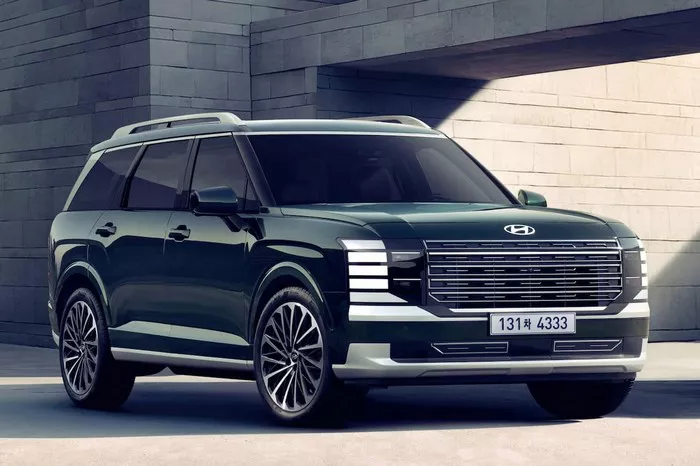
Hyundai is preparing to launch the 2027 Palisade in its home market, skipping the 2026 model entirely, according to The Korean Car Blog. The updated three-row SUV will feature a new “Black Ink” styling package, signaling Hyundai’s continued push into the premium SUV segment.
The Black Ink edition, expected to be offered on the range-topping Calligraphy trim, swaps traditional chrome accents for darker, more understated finishes. Gloss black elements will replace chrome on the grille, window trim, and door handles, complemented by darkened badging and model lettering. Unique 21-inch gloss black alloy wheels complete the monochromatic design, giving the Palisade a more sophisticated presence reminiscent of luxury SUVs like the Land Rover Defender or Cadillac Escalade.
Hyundai previously offered the Black Ink treatment on the Palisade in Australia in 2024, where it included a suede headliner and a leather-and-suede interior. While interior details for the Korean 2027 model are not yet confirmed, it is expected to carry over similar premium touches.
Under the hood, the 2027 Palisade marks a significant change. The Korean model drops the traditional V6 engine entirely, replacing it with a 2.5-liter turbocharged four-cylinder producing 281 horsepower—just shy of the outgoing V6. A hybrid variant pairs the same engine with an electric motor for a combined output of 334 hp. These new powertrains may eventually appear in other Hyundai models, including the next-generation Tucson and Kona.
By skipping the 2026 model year in Korea, Hyundai aims to relaunch the Palisade with renewed attention and a stronger premium image. The automaker has already faced challenges in the U.S., where sales of some 2026 Palisade models were halted due to a fatal safety issue under investigation.
With its blacked-out exterior, upgraded powertrains, and enhanced interior features, the 2027 Hyundai Palisade positions itself as a serious contender in the premium three-row SUV market. Whether the U.S. market will receive the same treatment remains to be seen, but the model clearly reflects Hyundai’s long-term goal: competing with established luxury brands such as BMW, Cadillac, and Genesis.
