
Pancreatic cancer is one of the deadliest diagnoses a doctor can deliver. Only 13% of patients survive five years after diagnosis, according to the National Cancer Institute. Although it accounts for just 3.3% of new cancer cases in the U.S., it causes 8.4% of cancer deaths, ranking third among all cancers.
The main challenge is late detection. Pancreatic cancer often shows symptoms only at advanced stages. No federally approved screening tests exist for early detection, and the disease spreads quickly while responding poorly to treatment.
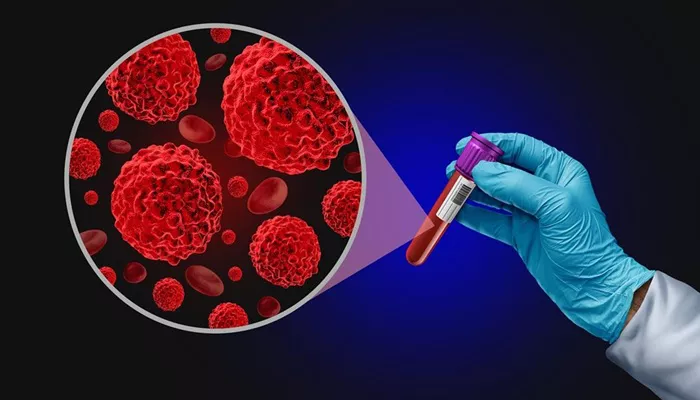
Researchers at Oregon Health & Science University (OHSU) have developed a potential solution: a liquid biopsy, a blood test that detects pancreatic cancer before symptoms appear. Early detection could allow doctors to start treatment sooner and track its effectiveness.
In a study of 350 patients, including both healthy individuals and those with pancreatic cancer, the test measured changes in protein activity associated with pancreatic ductal adenocarcinoma (PDAC), the most common and deadly form. It correctly identified healthy individuals 98% of the time and detected cancer in 73% of patients. The study was published in Science Translational Medicine earlier this year.
Liquid biopsies are emerging for dozens of cancers, often using blood, urine, or saliva samples.
“Liquid biopsies show promise for discovering many cancers earlier than they are found now,” says Jasmine Zhou, PhD, professor at UCLA and CEO of EarlyDiagnostics, a company developing such tests.
However, questions remain. The U.S. Food and Drug Administration (FDA) has approved only a few liquid biopsies for cancer detection, and most insurers do not cover them. Currently, screening exists for just five cancers: breast, cervical, colorectal, prostate, and lung, notes Richard Hoffman, MD, emeritus professor at the University of Iowa. Other cancers account for nearly half of all diagnoses and about 60% of cancer deaths.
Some of the most ambitious tests are multi-cancer early detection (MCED) assays, which scan for multiple cancers simultaneously. Jagpreet Chhatwal, PhD, from Harvard Medical School, calls these tests a “game changer” for detecting cancers that lack standard screening methods.
How Liquid Biopsies Work
Liquid biopsies detect cancer signals, not the tumor itself. Tumors shed DNA mutations or trigger protein changes detectable in bodily fluids. Surgical biopsies sample cancer cells directly, while liquid biopsies identify these molecular footprints.
“Part of the tumor dies, and the DNA of those cells is released into the blood,” explains Jose Montoya Mira, PhD, research engineer at OHSU.
Currently, only a few FDA-approved liquid biopsies are routinely used, including PSA blood tests for prostate cancer and Cologuard stool tests for colorectal cancer.
The OHSU test, named PAC-MANN, detects protein breakdowns signaling PDAC. It achieved 93% overall accuracy and correctly identified early-stage cancer 85% of the time when combined with an existing CA 19-9 blood test. Fluorescent peptides in the test made cancer samples “light up” during analysis, according to Jared Fischer, PhD, of OHSU.
OHSU’s next steps include analyzing a prospective cohort in real time and launching a clinical trial, focusing on high-risk patients who currently have no accessible screening options.
Mceds and Broader Cancer Detection
MCEDs are commercially available in the U.S., including Galleri (GRAIL) and Cancerguard (Exact Sciences). Research suggests MCEDs could increase early-stage diagnoses and reduce late-stage diagnoses by up to 45%.
Simpler blood tests may also encourage more people to get screened, compared with colonoscopies or CT scans.
Challenges and Considerations
Liquid biopsies raise questions about accuracy, follow-up, treatment necessity, and cost. Many are still experimental, and MCEDs have not yet been evaluated in large randomized trials. Positive results require confirmatory surgical biopsies, which are invasive and stressful.
Early detection might also reveal cancers that don’t need immediate treatment, potentially causing patient anxiety but offering long-term benefits. Cost is another barrier, as insurance coverage is limited and tests can cost hundreds of dollars.
Importantly, liquid biopsies should supplement—not replace—existing screenings.
Experts recommend focusing on high-risk patients based on age, family history, and exposure to carcinogens. Physicians must educate patients about the limits of these tests while acknowledging their potential.
Despite uncertainties, liquid biopsies represent a major step forward in early cancer detection, offering hope for more timely diagnoses and improved outcomes.
Related topic:
