
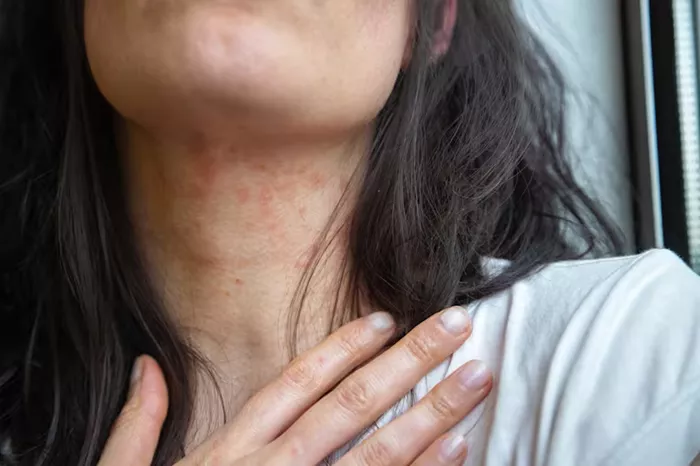
Eczema and eosinophilic esophagitis (EoE) affect different parts of the body—the skin and the digestive tract, respectively. However, a new study suggests that having eczema may increase the risk of developing EoE, particularly in individuals with allergies to milk, wheat, or eggs. The research was published in International Archives of Allergy and Immunology.
“We knew that people with EoE often have atopic conditions, but it was unclear how often EoE occurs in those with atopic diseases,” said Dr. Micheal Tadros, a gastroenterologist at Albany Medical Center in New York and coauthor of the study. “Understanding this helps clinicians screen earlier, identify symptoms sooner, and prevent long-term complications such as esophageal scarring.”
Study Findings
The cross-sectional study analyzed electronic health records from approximately 1.1 million adults in the nationwide Veteran’s Affairs database. Researchers randomly selected 10% of patients for the study, finding that 26% had eczema and less than 1% had EoE. Food allergies to milk, eggs, or wheat were also noted.
Analysis revealed that people with eczema were about three times more likely to have EoE than those without eczema. The risk increased further for patients with food allergies: four times higher for egg allergies, nearly six times higher for wheat allergies, and 20 times higher for milk allergies.
“People with eczema are at higher risk for EoE, especially if they have food allergies,” Dr. Tadros said.
Shared Immune Pathways
The study reinforces the idea that eczema, EoE, and food allergies share immune system mechanisms. “It’s not just coincidence; it reflects how the immune system behaves across multiple organ systems,” said Dr. Inderpal Randhawa, an allergist and immunologist who reviewed the study.
Researchers suggest that defects in the skin barrier seen in eczema mirror similar epithelial defects in EoE, predisposing patients to both conditions. Food allergens may also trigger inflammation in both the skin and esophagus, particularly in early life when exposure to milk, eggs, and wheat is common.
Implications for Early Detection
There is currently no known way to prevent EoE. However, understanding the link between eczema, food allergies, and EoE can aid early detection. “Early detection is crucial,” Dr. Tadros said. Untreated EoE can lead to esophageal scarring or narrowing, causing difficulty swallowing.
Clinicians may now be more alert to EoE symptoms—such as trouble swallowing, food sticking in the throat, or persistent acid reflux—in patients with eczema or food allergies. “Proactive testing and early interventions can make a significant difference,” Dr. Randhawa said. Patients should also follow their eczema management plan and avoid known food allergens.
Future Research
Further studies are needed to clarify the relationship between eczema, food allergies, and EoE. Better understanding could help determine whether routine EoE screening for high-risk patients is warranted and whether prevention strategies may one day be possible.
Related topic:
