
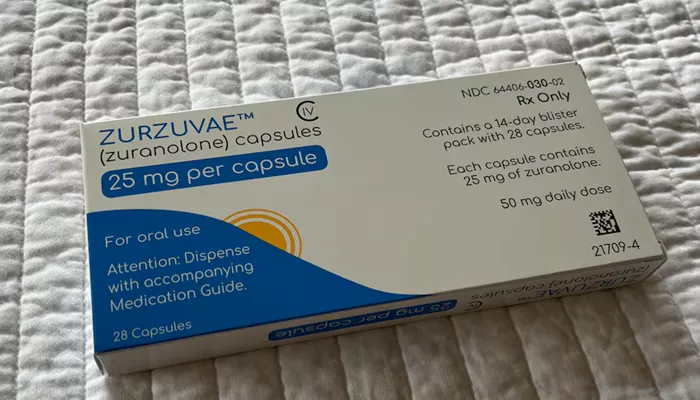
Health Canada has authorized a new medication, zuranolone, to treat postpartum depression, marking the first drug approved in the country specifically for this condition. Sold under the brand name Zurzuvae, the pill is intended for women experiencing moderate to severe depressive symptoms after childbirth.
“This is the first drug authorized in Canada for this purpose,” Health Canada said in a statement to CBC News. Severity is measured by the degree to which daily functioning is impaired.
Developed by Biogen, zuranolone is taken once daily for 14 days. It is expected to be available in Canada in early 2026, though governments and insurers must determine coverage. Health Canada confirmed that it conducted a “thorough review” of Biogen’s evidence, concluding that the drug meets standards for safety, effectiveness, and quality, and that its benefits outweigh its risks. The medication is already authorized in the U.S., the U.K., and the European Union.
Dr. Ryan Van Lieshout, a psychiatry professor at McMaster University, said he hopes the approval raises awareness about postpartum depression. “Hopefully, it reduces some self-blame around why this develops,” he said. “There’s a biological contributor to it, and it’s treatable.”
Postpartum depression can cause mood swings, severe anxiety or panic attacks, irritability, feelings of worthlessness, difficulty bonding with the baby, and fatigue beyond typical new-parent sleep deprivation. According to Statistics Canada, about 23 percent of new mothers report symptoms consistent with postpartum depression or anxiety.
Unlike traditional antidepressants, which may take weeks to work, zuranolone acts quickly and is taken for only 14 days. Clinical trials showed that by day 15, roughly 27 percent of participants reported no depressive symptoms. Some saw improvement as early as day three, with effects lasting through the 45-day study period.
Kara Fiscus, 37, of Sacramento, California, experienced postpartum depression after giving birth in May 2023. She began taking zuranolone following hospitalization. “By day three, I remember telling my husband, ‘It’s been at least 20 minutes since I thought about killing myself,’” she said. “That was a very big deal.”
How Zuranolone Works
Zuranolone is a synthetic form of allopregnanolone, a metabolite of the hormone progesterone, which fluctuates during pregnancy. Unlike SSRIs, which increase serotonin in the brain, zuranolone is a neurosteroid that targets gamma-aminobutyric acid (GABA) receptors, helping regulate mood.
Dr. Kristina Deligiannidis, a psychiatrist and researcher at Zucker Hillside Hospital in New York, said participants in her clinical trials reported feeling a “veil lifting” as early as the third day of treatment. About 57 percent of patients in the zuranolone group improved by 50 percent, compared with 39 percent in the placebo group. By day 15, 27 percent of the treatment group were symptom-free, versus nearly 17 percent in the placebo group.
The long-term effects and recurrence of symptoms after treatment remain unclear.
Considerations and Side Effects
Zuranolone cannot be used during pregnancy and is not recommended for breastfeeding. Up to 30 percent of patients experience significant sleepiness, prompting recommendations not to drive within 12 hours of taking the medication. The cost in Canada has not yet been announced; in the U.S., a 14-day course costs $15,900 USD.
Dr. Crystal Clark, an associate professor of psychiatry at the University of Toronto, said the drug expands treatment options but emphasized that therapy should be individualized. “While one person might feel slightly drowsy, another may not be able to rouse to feed a baby,” she said. She compared the short course of zuranolone to a brief course of antibiotics, contrasting it with longer-term antidepressants.
All experts agree that psychotherapy remains the first-line treatment for postpartum depression.
Related topic:
