
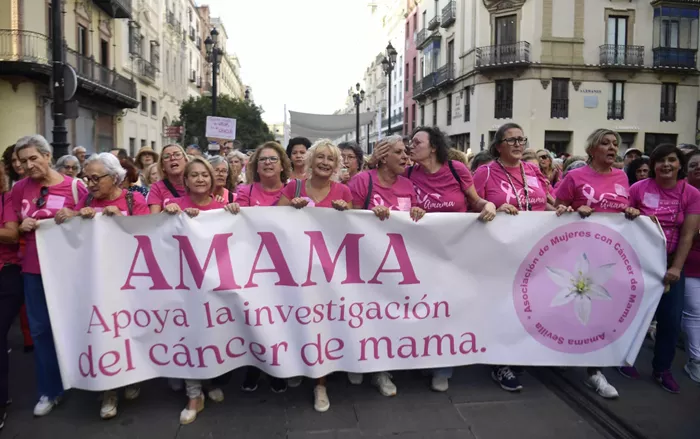
In Seville and other Andalusian cities, thousands gathered on Sunday to protest a growing breast cancer screening scandal that has left hundreds of women without results from public hospital mammograms.
The regional government, led by a conservative administration, confirmed that the crisis affected at least 2,300 women who underwent screening in recent years. What emerged from multiple mammography reports were tests that either revealed issues or produced inconclusive results, all of which should have prompted follow-up actions. The failure to inform patients has raised concerns about missed or delayed cancer diagnoses.
Context and Accountability
Spain’s healthcare system is decentralized, with regional authorities responsible for public health services. The scale of the scandal has intensified tension between the central government in Madrid and Andalusia’s regional leadership, which has faced scrutiny over its crisis management.
Protests were organized by AMAMA, a Seville-based association representing women with breast cancer. Demonstrators gathered outside the San Telmo Palace, the regional government’s seat, demanding accountability from regional leaders. Chants included calls for resignation and for prompt action to protect patients’ lives, highlighting the urgency felt by those affected.
Political and Administrative Response
Amid the outcry, Andalusia’s leader, Juan Manuel Moreno Bonilla, faced sustained criticism for his administration’s handling of the crisis. Acknowledging the public health implications, Bonilla apologized to patients earlier this month. The health minister, who served as a focal point of the controversy, resigned in the wake of the scandal.
In response to the crisis, regional authorities pledged to bolster staffing in mammography units as part of a broader effort to address systemic gaps. However, many patients and activists view these measures as insufficient without comprehensive changes to screening workflows, result communication, and follow-up protocols.
National Coordination and Future Studies
Spain’s health ministry announced an in-depth study of cancer screening programs, beginning with a focused review of Andalusia’s screening operations. By examining how results are reported, how follow-ups are scheduled, and how data are tracked, the study aims to identify weaknesses and implement reforms that can prevent similar failures in other regions. The findings are expected to inform national guidelines and may drive standardization across Spain’s decentralized healthcare system.
Potential Legal and Health Implications
Several patients have indicated plans to file formal complaints against the regional government. Beyond accountability, the incident raises important questions about patient safety, the reliability of screening programs, and the speed with which patients receive critical health information. Health professionals emphasize the need for robust communication channels, transparent reporting, and timely follow-up to ensure early detection and treatment where necessary.
Key takeaways for readers
The scandal involves public breast cancer screening tests in Andalusia where results were delayed or not communicated.
Regional authorities have pledged staffing enhancements but face sustained pressure to implement broader reforms.
A national study will scrutinize cancer screening programs, starting with Andalusia, to inform policy changes and improve patient safety.
Related topics
