
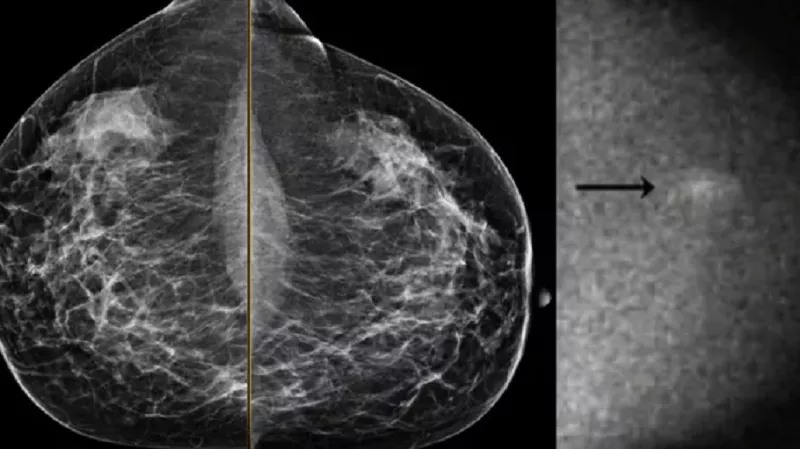
For millions of women identified as having dense breast tissue, healthcare teams often recommend supplemental screening to enhance cancer detection. Dr. Kristin Robinson, a breast radiologist at Mayo Clinic, explains that dense breast tissue presents two key challenges: it appears white on mammograms—the same color as cancerous growths—making small tumors difficult to detect, and it is associated with a slightly higher risk of developing breast cancer. These factors make supplementary screening a critical consideration for women with dense breasts.
Molecular Breast Imaging as a Screening Option
One effective supplemental screening method is Molecular Breast Imaging (MBI), a test originally developed at Mayo Clinic. MBI is performed alongside mammography and uses a radioactive tracer to identify cancer cells. The technology leverages the fact that cancerous tissues have higher metabolic activity and blood flow than surrounding healthy tissue, causing them to absorb more tracer material. This contrast allows radiologists to detect abnormalities that might be obscured on traditional mammograms.
How MBI Technology Works
During an MBI procedure, a small amount of radioactive tracer is injected into the patient’s bloodstream. Active cancer cells, which require more energy due to rapid growth, absorb the tracer at a higher rate. Specialized cameras then capture images highlighting areas of increased tracer uptake, making cancerous regions visually stand out against normal breast tissue. This process provides radiologists with a clearer view of potential malignancies that might be missed by mammography alone.
Evidence Supporting MBI Effectiveness
Research conducted at Mayo Clinic has demonstrated that MBI significantly improves cancer detection rates in women with dense breasts compared to mammography alone. The test is particularly valuable for patients whose breast density reduces the effectiveness of standard imaging. By complementing mammography with metabolic information, MBI offers a more comprehensive assessment, helping to identify cancers at earlier, more treatable stages.
Consulting Healthcare Providers for Personalized Decisions
Dr. Robinson emphasizes that choosing the right supplemental screening option—whether MBI, ultrasound, MRI, or other technologies—should be a collaborative decision made with a healthcare team. Factors such as individual risk profile, breast density level, and personal preferences all play a role in determining the most appropriate screening strategy. Women with dense breasts are encouraged to discuss these options with their providers to ensure they receive the most effective, personalized care.
Related topics:
