
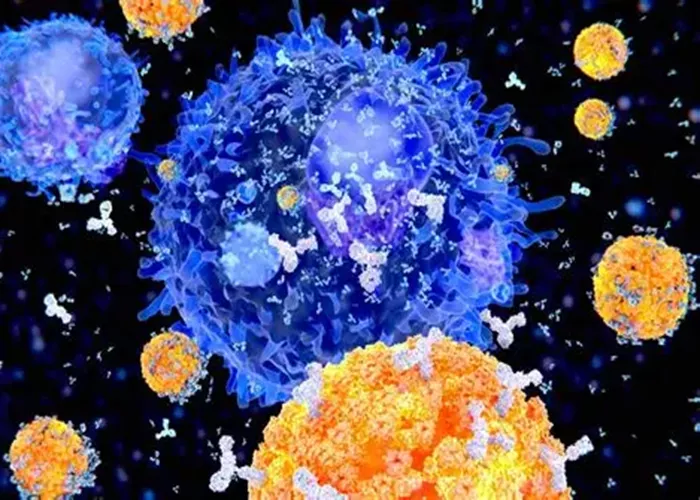
Scientists at Scripps Research have developed a groundbreaking microchip technology that uncovers the “war” between individual antibodies and viruses using only a tiny blood sample. This breakthrough, published in the latest issue of *Nature Biomedical Engineering*, provides faster and clearer data to support vaccine development and antibody discovery.
The new method, based on microfluidic electron microscopy-enabled polyclonal epitope mapping (mEM), identifies how antibodies bind to viral proteins in minuscule human or animal blood samples, which can then be observed using standard electron microscopy.
Traditional approaches like electron microscopy-based polyclonal epitope mapping, while revolutionary, take up to a week and require large blood volumes. In contrast, the mEM technique analyzes just 4 microliters of blood in approximately 90 minutes.
Experiments show the technology is not only faster and more sensitive than its predecessors but also reveals previously unknown antibody binding sites. Researchers can now track how antibodies evolve in response to pathogens or vaccination with greater speed and efficiency.
Moreover, mEM enables continuous monitoring of individual immune responses—a critical capability for understanding vaccine efficacy that was previously unattainable through simple means.
The team is currently working to enhance the mEM system’s automation and multitasking abilities, aiming to eventually process dozens of samples in parallel. It is poised to become a widely adopted tool, accelerating vaccine development for diseases such as coronaviruses and malaria, particularly when sample volumes are extremely limited or rapid preliminary results are urgently needed.
This innovative microchip technology acts like a “high-definition slow-motion camera” for antibody-virus interactions. With a single drop of blood, researchers can identify binding events, assess antibody effectiveness, and pinpoint interaction sites in 90 minutes—essentially waging a “blitzkrieg” against viruses. By enabling continuous immune response monitoring with smaller samples and faster processing, it promises to boost vaccine and antibody drug development, playing a pivotal role in curbing pandemics and advancing global health.
Related topics:
Weight Loss Drugs May Restore Testosterone in Obese Men, Study Shows
