
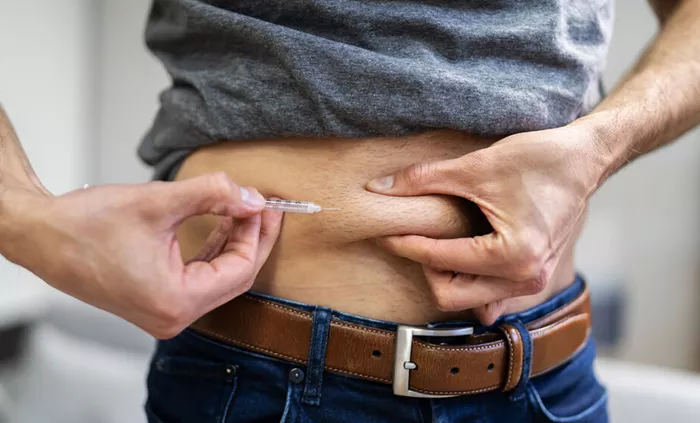
New research finds that popular weight loss medications like Ozempic may help men with obesity or Type 2 diabetes recover healthy testosterone levels.
Weight loss drugs used to treat obesity and diabetes could also improve hormonal health in men, according to new findings presented at the Endocrine Society’s 2025 annual meeting in San Francisco. The study focused on men taking GLP-1 receptor agonists such as semaglutide (Ozempic) and tirzepatide (Mounjaro).
Researchers at SSM Health St. Louis University Hospital reviewed electronic health records of 110 men who were either obese or had Type 2 diabetes. Their goal was to examine how testosterone levels changed before and after starting these medications.
Participants, with an average age of 54, were tracked for 18 months. At the beginning, about half had testosterone levels that were low or borderline low. By the end of the study period, most had returned to normal hormone levels without taking any testosterone replacement therapy (TRT).
Dr. Shellsea Portillo Canales, the lead author and an endocrinologist at SSM Health, explained the improvement:
Medications May Reduce the Need for Testosterone Therapy
Dr. Portillo emphasized the importance of monitoring testosterone levels in men who are already on hormone therapy when they begin using weight loss drugs. If testosterone levels return to normal during treatment, some patients may need to reduce or stop their supplemental hormone doses.
However, the study has some limitations. Because it was retrospective — analyzing past medical records rather than running a controlled trial — it cannot prove the medications directly caused the increase in testosterone. Also, the researchers did not check hormone levels after the men stopped taking the drugs.
“If weight is regained, testosterone levels could drop again,” Portillo noted.
Experts Urge a Natural Approach to Hormonal Balance
Dr. Susan Spratt, a professor of medicine at Duke University who was not involved in the study, said many men are given testosterone treatments unnecessarily when they are only slightly below the normal range.
“It’s better to treat the root cause — like obesity or diabetes — and allow testosterone to rise naturally,” Spratt said.
Testosterone replacement therapy can carry several risks, including:
- Worsening sleep apnea
- Acne
- Prostate or breast enlargement
- Lower sperm count
- Testicle shrinkage
- Increased risk of blood clots
Spratt warned that prescribing testosterone without a clear medical reason is controversial and has increased recently due to aggressive marketing campaigns.
A Dual Benefit: Weight Loss and Hormonal Health
Dr. Fatima Cody Stanford, an obesity medicine physician at Harvard Medical School, said the study shows how these drugs offer more than just weight loss benefits.
“This research highlights a powerful connection between metabolic and hormonal health,” Stanford said. “It suggests these medications could improve overall wellness, including reproductive health.”
Normal testosterone levels range from 300 to 1,000 nanograms per deciliter. Testosterone typically begins to decline in men starting in their late 30s or early 40s, with levels falling to about 65% of young adult averages by age 75.
“Improving testosterone can enhance quality of life and reduce health risks linked to low levels,” Portillo added.
Spratt also explained that there’s an important difference between raising already normal levels and correcting true low testosterone.
Only clinically low testosterone is associated with health risks such as:
- Reduced bone density
- Muscle loss
- Low red blood cell count
- Decreased sex drive
Why the Study Focused on Men
The study only included men because the researchers did not expect these medications to increase testosterone in women. In women, testosterone is only checked if there are signs of hormonal imbalance, such as:
- Irregular periods
- Infertility
- Excess facial hair
- Masculinization
In such cases, high testosterone can indicate conditions like PCOS (polycystic ovary syndrome), adrenal disorders, or tumors. Interestingly, some research has shown that GLP-1 drugs may slightly lower testosterone in women with PCOS by improving insulin sensitivity.
Related topics:
