
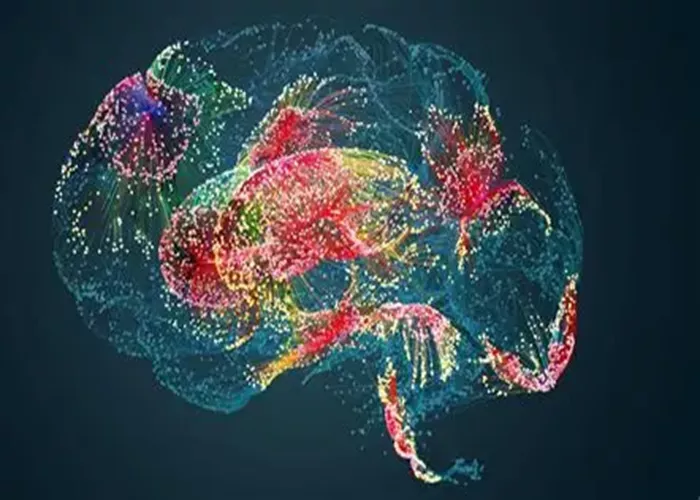
The formulation of a refined human brain atlas has long stood as one of the ultimate objectives in the scientific community. However, the complexity of the mammalian brain is beyond imagination; the human brain, analogous to a vast universe, comprises approximately 100 billion neurons and over 100 trillion neural connections. The high diversity, dynamic evolutionary characteristics, and species-specific differences of the human brain constitute one of the greatest enigmas and challenges in the fields of science and medicine.
On July 10, China’s brain mapping research team announced its achievements: 10 research results on brain mapping, jointly completed by more than 30 domestic and foreign institutions including CEBSIT, involving over 300 researchers, were published in international journals such as Cell and Neuron in the form of a thematic collection. These series of results have in-depth analyzed the diversity of brain cell types, connection rules, developmental and evolutionary laws, and molecular mechanisms of brain diseases, realizing the leap from rodent to primate mesoscale atlas mapping at single-cell resolution, and further consolidating China’s international influence in the field of mesoscale brain mapping.
Challenge: Unlocking the Last “Black Box” of the Human Body
The brain is the last “black box” of the human body. By formulating high-precision “brain maps,” scientists can accurately locate nerve cells, analyze the rules of neural network connections, thereby providing important support for understanding brain function mechanisms, overcoming brain diseases, and researching brain-like intelligence.
“The research content of brain mapping includes identifying various cell types, mapping how various cells are distributed in the brain, and the structure of neural connection networks between cells, which is an important frontier issue in the field of brain science,” introduced Pu Muming, Academic Director of CEBSIT and academician of the Chinese Academy of Sciences.
China’s brain mapping research team used the self-developed single-cell sequencing platform of BGI Research to map, for the first time, high-precision evolutionary atlases of 1.3 million brain cells from five amniote species: turtles, zebra finches, pigeons, mice, and macaques. This research, spanning 320 million years of brain evolutionary history, discovered the evolution of key genes, which cause differences in brain cell types among different species.
In addition, China’s brain mapping research team has, for the first time in the world, mapped the whole-brain mesoscale connection atlas of the claustrum, a key brain region possibly related to consciousness. “The claustrum is a thin and mysterious structure deep in the human brain. The atlas results support the conjecture of Nobel laureate Francis Crick: the claustrum may be a key nucleus for consciousness generation, acting like the ‘general commander’ of the brain, connecting almost all brain regions,” introduced Shen Zhiming, author of the result paper and researcher at CEBSIT.
Breakthrough: Realizing the Leap from Rodent to Primate Research
The 10 results released this time cover key species such as reptiles, birds, rodents, non-human primates, and humans, integrating multi-modal data such as transcriptomes and connectomes of these key species, further expanding the connotation of international brain mapping in cross-species comparison and spatiotemporal dynamic analysis.
“I think the biggest progress is that we have promoted connection atlas research from mice to non-human primates, that is, the research stage of macaques,” said Sun Yangang. Among the 10 results released this time, two important articles describe the brain structure of primates. The brain of non-human primates is the most similar to that of humans in structure. Studying their brain maps using non-human primates as models is of great significance before researching the human brain.
The first global mapping of the single-cell resolution whole-brain connection atlas of the macaque prefrontal cortex is one of the achievements that realize this major leap.
Gou Lingfeng, co-first author of the result paper and associate researcher of the research group of Yan Jun from CEBSIT, introduced that the prefrontal lobe, as the “command center” of the brain, is in charge of advanced cognitive functions such as memory and behavior control. “Previously, our group took the lead in completing the large-scale whole-brain connection atlas of the prefrontal cortex in rodents internationally, but to understand issues such as ‘what makes humans human’ and ‘why we are conscious,’ research needs to realize the leap from relatively low-level mice to high-level primates.”
The successful mapping of the whole-brain projection atlas of neurons in the macaque prefrontal cortex allows people to see the “precision circuit diagram” of information transmission in the brain. Robert Desimone, director of the McGovern Institute for Brain Research at the Massachusetts Institute of Technology, commented, “This new ‘circuit diagram’ of the primate prefrontal cortex and its connections is extremely necessary for promoting our understanding of cognitive functions in healthy and disease states.”
Collaboration: Jointly Formulating a High-Quality “World Map” of the Brain
When Science magazine proposed 125 major scientific issues on its 125th anniversary, 18 of them belonged to the field of brain science. In recent years, European and American countries have launched brain science plans with brain mapping research as the core content, and Chinese scientists are also promoting the “Whole-Brain Mesoscale Neural Connectome” large-scale scientific initiative. According to this plan, China strives to complete the mapping of the whole-brain mesoscale neural connectome of mice by 2025 and of macaques by 2035.
If each region of the human brain is compared to an area, then mapping the human brain atlas is equivalent to formulating a “world map” of the brain. In Sun Yangang’s view, the concentrated release of these results is the starting point for formulating this “world map” of the brain.
Formulating a truly high-quality “brain map” is a very important scientific project. Sun Yangang said that primate brain mapping research is characterized by huge engineering, long cycle, and amazing data volume. It is necessary to continuously deepen global scientific and technological cooperation and jointly strive for higher goals in deciphering the primate mesoscale brain atlas.
Among the results released this time, the single-cell spatial transcriptome atlas of the macaque claustrum has gathered 92 researchers from 8 domestic and foreign research institutions, integrating core resources from institutions such as INSERM Stem Cell and Brain Research Institute, BGI Research, and Tencent Life Science Laboratory. “In the research on the claustrum connectome, the French side provided important connectome data of some brain regions of macaques,” said Shen Zhiming.
It is understood that domestic institutions such as CEBSIT are taking the lead in carrying out in-depth cooperation with top global scientific research institutions and scientists to jointly establish the “International Primate Mesoscale Brain Atlas Alliance.” Chinese scientists will also join hands with global scientists in the field of brain mapping to continuously promote the “Whole-Brain Mesoscale Neural Connectome” large-scale scientific initiative, while establishing a global open and shared brain atlas database. Sun Yangang said that the research team has released the first macaque single-cell precision brain projection atlas database, establishing a platform for global sharing of brain mapping research data and laying a foundation for the research on primate and human brain functions.
Related topics:
New Guidelines Urge Better Preconception Care for Women with Diabetes
Pregnancy Risks Rise with ART for Women After Kidney Transplants
