
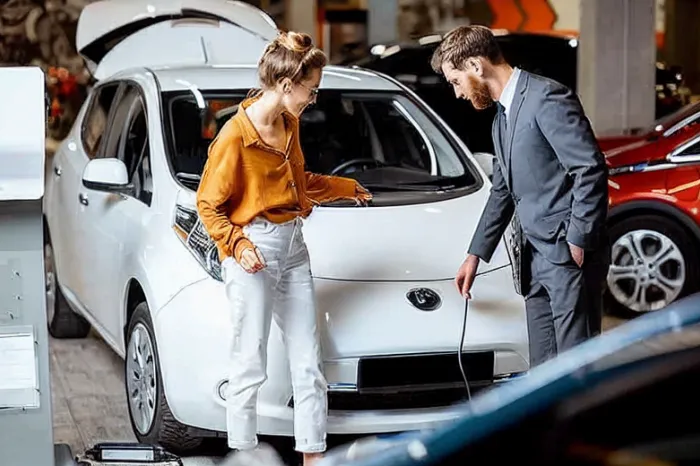
With rising gasoline prices prompting more drivers to consider electric vehicles (EVs), the used EV market is gaining attention as an affordable alternative. Buying a used EV can be cheaper than purchasing a new one, with some models offering excellent value due to steep depreciation. Popular choices include the Chevrolet Bolt EV and Bolt EUV, Hyundai Kona Electric, Hyundai Ioniq 5, Tesla Model 3, and Audi E-tron. These vehicles offer a range of features, respectable driving ranges, and varying price points that make them accessible for many buyers.
The Chevrolet Bolt EV and Bolt EUV stand out as some of the most budget-friendly used EVs, with prices averaging around $18,000 for recent models from 2021 to 2023. Both models provide over 240 miles of EPA-estimated range on a full charge, making them suitable for daily commuting. The Hyundai Kona Electric also offers a strong package with over 250 miles of range and nimble handling, priced at about $19,000 for models from 2022 to 2024. The Hyundai Ioniq 5 is favored for its comfort and fast charging capabilities, although it is slightly pricier at around $25,000.
For those seeking an electric sedan, the Tesla Model 3 is a popular option known for its spacious interior and access to Tesla’s extensive Supercharger network. Used Model 3s from recent years generally cost about $26,000. Luxury EV buyers might consider the Audi E-tron Q8, which offers upscale features like leather seats and all-wheel drive starting at approximately $34,000 for models between 2022 and 2024.
Despite these benefits, prospective used EV buyers must carefully research battery condition and warranty status. A recent case involved a woman who purchased a used Tesla Model S without fully checking its battery warranty. Shortly after purchase, she discovered that the battery was failing and no longer covered under Tesla’s eight-year or 150,000-mile warranty. The repair cost was estimated at $16,000—an unexpected expense that rendered her vehicle unusable until fixed.
Battery health remains a crucial consideration because replacement costs can be high. However, improvements in battery technology have reduced failure rates in newer EVs. Data shows that batteries in vehicles manufactured between 2017 and 2021 require replacement much less frequently than earlier models. Still, it is essential for buyers to verify warranty coverage and have batteries inspected before purchasing a used EV.
Some third-party shops now offer battery repairs or partial replacements at lower costs than manufacturers’ dealerships. This growing market provides more options for owners facing battery issues. Experts advise buyers to do thorough research on specific models and consult professionals to avoid costly surprises.
In conclusion, used electric vehicles present an affordable way to enter the EV market while enjoying modern technology and environmental benefits. However, buyers should prioritize understanding battery condition and warranty details to ensure their investment is sound. With careful planning and informed decisions, purchasing a used EV can be both economical and practical.
