
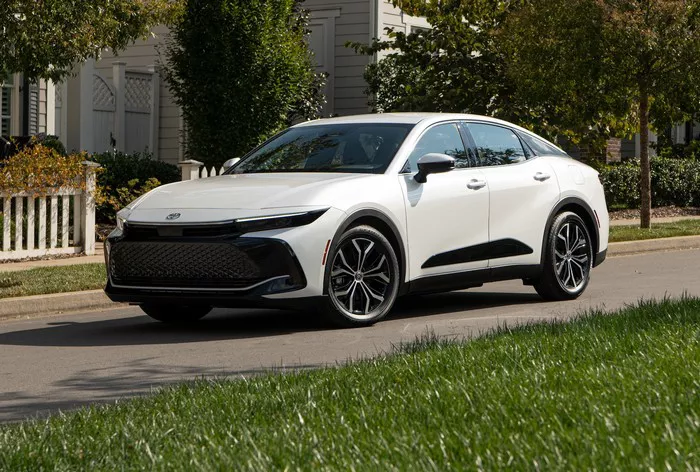
Luxury vehicles are becoming increasingly less accessible in the United States, driven by higher development, production, and distribution costs. As manufacturers face rising expenses, the prices of new cars across all segments are climbing. Luxury models, in particular, command higher margins, leading to retail prices that often exceed production costs by a substantial margin.
At the same time, consumer demand for premium features is reshaping the mainstream market. Many buyers now expect a sense of luxury even in traditionally mass-market sedans and SUVs, prompting automakers to enhance materials, technology, and interior refinement. In 2026, one Japanese sedan has emerged as a standout example, delivering high-end luxury without a prohibitive price tag.
The State of Luxury Cars in 2026
The U.S. luxury car market is undergoing a major transformation toward electrification and software-driven experiences. Legacy brands like BMW, Lexus, and Mercedes-Benz continue to dominate sales, with BMW holding a slight overall volume advantage while Lexus grows rapidly thanks to its hybrid-focused lineup. Crossovers and SUVs dominate today’s luxury segment, largely replacing mid-sized sedans that once defined the category.
Over the past two decades, luxury has shifted from mechanical prestige and engine displacement to digital ecosystems, driver-assistance technologies, and sustainable powertrains. While early 2000s luxury relied heavily on BMW, Mercedes, and Audi, today’s market emphasizes electric drivetrains, high-torque motors, and expansive digital interfaces.
Toyota’s Strategy in the Premium Sedan Segment
Toyota has steadily evolved its sedan lineup over the last decade, moving away from a wide range of internal-combustion models toward a streamlined, hybrid-centric portfolio. Many long-standing models have been retired in favor of aerodynamic, coupe-inspired designs equipped with advanced driver-assistance systems. Electrification is now central, with midsize and full-size sedans featuring hybrid or plug-in hybrid powertrains that balance performance and fuel efficiency.
Toyota’s approach combines premium materials, advanced technology, and competitive pricing to attract buyers who might otherwise consider traditional luxury brands. Its flagship sedans blur the line between executive cars and high-end crossovers, offering all-wheel-drive capability, tech-forward interiors, and a refined driving experience without a steep luxury markup.
The 2026 Toyota Crown: Mainstream Meets Executive Luxury
The 2026 Toyota Crown is Toyota’s top-tier sedan, positioned as the successor to the Avalon. It offers a quiet, commanding ride and a premium experience designed to appeal to buyers seeking executive-level refinement without the luxury brand price tag.
While not a mass-volume seller, the Crown shows signs of gaining traction. In 2025, it sold 12,309 units—a 37.1% decline year-over-year—but February 2026 figures indicate a 67.9% year-on-year sales increase, reaching 1,026 units.
Performance, Technology, and Premium Features
The Crown is available in four trims, each adding incremental luxury and technology:
- XLE ($41,440): Leather-trimmed, eight-way power-adjustable heated and ventilated seats, 12.3-inch digital cluster, dual-zone climate control, wireless Apple CarPlay and Android Auto, and a six-speaker audio system.
- Limited ($45,950): Adds panoramic glass roof, rain-sensing wipers, quad-LED projector headlights, and an 11-speaker JBL sound system.
- Nightshade ($48,765): Builds on Limited with 21-inch matte-black alloy wheels and blacked-out exterior accents.
- Platinum ($54,990): Features a 10-inch head-up display, panoramic view monitor, Advanced Park self-parking, hands-free trunk, digital key, and 21-inch machined-finish alloy wheels.
Performance is powered by hybrid systems: the XLE and Limited use a 2.5-liter four-cylinder hybrid producing 236 hp, while the Platinum utilizes a turbocharged 2.4-liter hybrid delivering 340 hp, achieving a 0–60 mph time of 5.7 seconds. Toyota’s TNGA-K platform ensures a comfortable, poised ride, with Adaptive Variable Suspension reserved for the Platinum trim.
Fuel Efficiency and Ownership Value
Hybrid technology gives the Crown impressive fuel economy. Standard models achieve 42/41/41 MPG (city/highway/combined) and a 594-mile range per tank, saving an estimated $2,750 in fuel over five years. The turbocharged Platinum model achieves 29/32/30 MPG, with a 435-mile range and $750 in five-year fuel savings.
Market Reception and Reliability
The Toyota Crown has received strong reviews for quality, performance, and value. J.D. Power awards it an 80/100 overall rating, while iSeeCars gives the 2026 model a 7.8/10 score for retained value. Consumer reviews on Edmunds average 4.3/5, praising ride comfort, efficiency, and premium features. Only minor criticisms mention limited interior space.
Conclusion
The 2026 Toyota Crown demonstrates that mainstream brands can deliver executive-level luxury without the hefty price tags associated with traditional luxury marques. With advanced hybrid powertrains, cutting-edge technology, and carefully curated trims, Toyota positions the Crown as a compelling option for buyers seeking sophistication, efficiency, and value in one package.
