
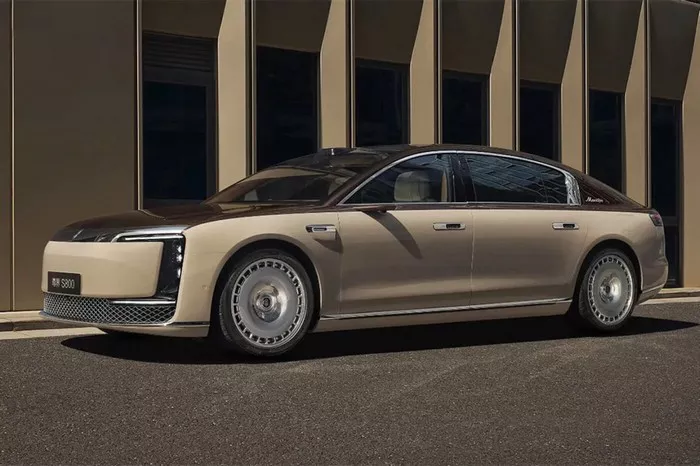
Most car enthusiasts outside China may not be familiar with the Maextro S800. Yet this large Chinese luxury sedan has quietly made a major impact in its home market, recently outselling the combined sales of the Porsche Panamera, BMW 7-Series, and Mercedes-Maybach S-Class in China.
Foreign automakers are facing increasing challenges competing with domestic brands in China, a trend particularly pronounced for Porsche. Once a cornerstone of the brand’s growth, Porsche is now navigating one of its most significant sales declines both in China and globally. According to Bloomberg, deliveries in China dropped roughly 26% last year, while worldwide shipments fell to approximately 279,449 units in 2025—10% lower than the previous year.
Shifting Chinese Demand
For years, Porsche thrived on China’s growing appetite for high-performance vehicles, with affluent buyers drawn to its combination of status and engineering. That dynamic is changing as a new generation of consumers increasingly values electric vehicles and cutting-edge technology. Chinese automakers have leveraged this shift by offering vehicles that combine competitive pricing with advanced performance and digital innovation. Cars like the Maextro S800 are now dominating a market segment that once belonged to Europe’s luxury elite.
Domestic brands such as Huawei’s Maextro, Xiaomi, and BYD are rapidly gaining traction in the luxury EV space. The Maextro S800 starts at around $103,000—roughly 40% less than a Porsche Panamera—while Xiaomi’s SU7 EV outpaces even the Taycan in acceleration, top speed, and power, all at a fraction of the price. These competitive advantages, coupled with strong local brand loyalty, are drawing buyers who previously prioritized foreign prestige badges.
Challenges for Porsche
For Porsche, prestige alone is no longer enough to guarantee success. The company has begun downsizing its dealership network in China and is scaling back its EV charging infrastructure to reduce costs and adapt to changing market conditions. Under CEO Michael Leiters, Porsche is focusing on its core strengths—high-margin sports cars and SUVs—while cautiously advancing electrification, aiming to maintain brand distinction rather than compete on price with domestic EV makers.
“Margins are a priority, though improvements this year are expected to be modest,” Leiters told investors. The strategy emphasizes careful cost control and a clearly defined product plan rather than a quick turnaround.
China Remains Key
Despite these challenges, China remains central to Porsche’s plans. “The needs of Chinese customers have fundamentally changed,” Porsche China President Alexander Pollich said. “As a niche brand, we cannot alter the economic environment or reverse market trends. Our focus must be on strengthening our core capabilities.”
Porsche will introduce the all-electric Cayenne, alongside gasoline-powered and plug-in hybrid SUVs, including China-exclusive models. To support these efforts, the company is opening a dedicated development hub in Shanghai, designed to operate independently from Germany. The first priority will be developing an infotainment system tailored to Chinese consumers, integrating local apps and services to meet the unique demands of the market.
In a rapidly evolving automotive landscape, Porsche’s success in China will increasingly depend on a blend of local innovation, targeted technology, and the brand’s enduring performance pedigree.
