
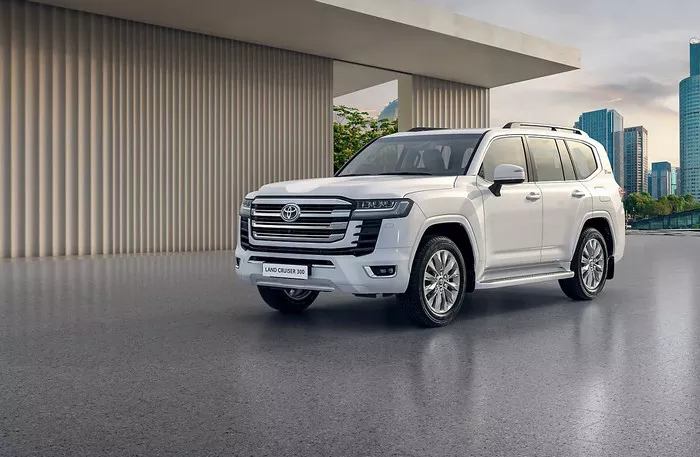
Luxury vehicles in the U.S. are becoming increasingly unattainable, driven by rising development and distribution costs and higher profit margins that encourage automakers to set elevated MSRPs. Simultaneously, conventional brands are investing heavily in premium-feeling designs to meet growing consumer demand for upscale vehicles, bridging the gap between mass-market and luxury offerings. For 2027, Toyota’s redesigned Highlander stands out as an SUV that combines luxury refinement with accessible pricing.
Shifting Trends in the U.S. Luxury Car Market
The U.S. luxury car market is undergoing a dramatic transformation, focusing on electrification, software-driven features, and high-tech interiors. As of March 2026, BMW, Lexus, and Mercedes-Benz lead the market, with BMW maintaining a slight volume edge and Lexus seeing strong growth through its hybrid lineup. Luxury crossovers and SUVs, including the Tesla Model Y, Lexus RX, and BMW X5, now dominate sales, replacing mid-sized sedans that once defined the segment.
Over the past two decades, the market has shifted from a hierarchy built on engine performance and mechanical prestige to one defined by digital ecosystems, driver-assistance technology, and sustainable powertrains. Tesla and Cadillac, among others, have leveraged electric motors and advanced software integration to capture market share and redefine the luxury experience.
Toyota’s Premium SUV Strategy
Toyota has spent the past decade elevating its SUV lineup, adopting a unified global architecture that prioritizes structural rigidity and refined driving dynamics. The redesign lowers the center of gravity, incorporates advanced suspension geometry, and improves ride quality, creating a balance between utility and luxury-level comfort.
Inside, Toyota has upgraded interiors with soft-touch materials, leather accents, brushed aluminum trim, and advanced digital cockpits with large infotainment screens. Active safety features, panoramic sunroofs, multi-zone climate control, and ventilated seating further position the Highlander as a sophisticated lifestyle SUV.
2027 Toyota Highlander: A Bold Electric Transformation
The 2027 Highlander marks Toyota’s first fully electric, three-row SUV for the U.S., offering up to 320 miles of range. The exterior is completely redesigned, featuring a sleek silhouette, a hammerhead front fascia with a closed grille, full-width LED lighting, and aerodynamic enhancements like semi-flush door handles and new wheel designs. Color options include sophisticated shades like Everest, Spellbound, and Reservoir Blue, as well as modern two-tone combinations.
The cabin emphasizes a digital-first premium experience, combining a 12.3-inch driver display and 14-inch infotainment screen into a single interface. A wheelbase extension of 8.1 inches accommodates full-sized adults in the third row, complemented by an L-finesse motorized seating system. Material upgrades include SofTex upholstery, soft-touch surfaces, and a redesigned center console with dual wireless charging pads. Ambient lighting now offers 64 colors and integrates with safety alerts, while the panoramic glass roof and acoustic glass enhance comfort and quietness.
Electric Performance and Battery Options
The 2027 Highlander offers two electric motor configurations: a single-motor front-wheel-drive XLE producing 221 hp and 198 lb-ft of torque, and a dual-motor all-wheel-drive system delivering 338 hp and 323 lb-ft. A single-speed direct-drive replaces the traditional eight-speed automatic, enabling features like vehicle-to-load functionality and a standard heat pump for efficiency in cold climates.
Battery options include a standard 77.0-kWh pack with an estimated range of 287 miles (FWD) or 270 miles (AWD), and an optional 95.8-kWh pack boosting range to 320 miles. Charging is streamlined through a standard NACS port for Tesla Supercharger access, DC fast charging to 80% in 30 minutes, and an 11-kW onboard charger for 7–9 hour home charging.
Pricing and Market Positioning
The 2027 Highlander is expected to launch in early 2027, with production at Toyota’s Kentucky facility by year-end. Industry estimates place the entry-level XLE at around $48,000, XLE AWD at $51,500, and the Limited dual-motor trim near $57,000. This positions the Highlander competitively against three-row EVs like the $54,900 Kia EV9, while still offering a hybrid or gas-powered Grand Highlander for those seeking larger dimensions.
By combining electric performance, advanced technology, and refined luxury features at a competitive price point, the 2027 Toyota Highlander demonstrates Toyota’s commitment to making premium SUVs more accessible without compromising sophistication.
