
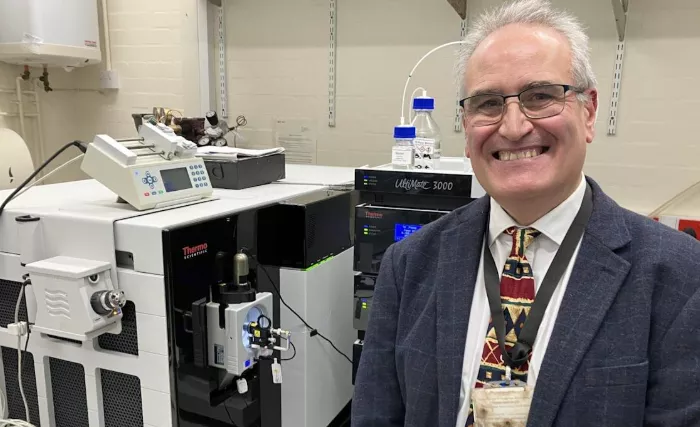
Researchers in Wales are developing innovative urine tests that could allow women to detect breast cancer, endometriosis, and polycystic ovary syndrome (PCOS) from home. The new tests aim to shorten diagnostic delays and improve early detection.
A team at Aberystwyth University, led by Professor Luis Mur, is working on a prototype kit that uses a lateral flow urine sample to detect early-stage breast cancer. The researchers have identified specific changes in urine that can signal the presence of breast cancer and even indicate the stage of the disease.
“We’ve found important urine markers that can tell if someone has breast cancer and its stage,” Professor Mur said. “We’re building small kits that patients can use at home or bring to their GP for testing.”
The same approach is now being tested to identify endometriosis and PCOS, conditions where diagnoses are often delayed and limited. Professor Mur emphasized that these new tests could significantly reduce waiting times for women seeking care.
The breast cancer testing kits are part of a broader effort supported by the Welsh government’s £75 million investment in women’s health research. The funding is part of Wales’ 10-year Women’s Health Plan, which also includes the development of women’s health hubs across the country.
Dr. Helen Munro, clinical lead for women’s health in Wales, highlighted the importance of bringing research into clinical practice faster. “Evidence suggests it can take 17 years for research to reach patients,” she said. “We’re working closely with universities and health boards to shorten that gap.”
Each health board in Wales is set to have at least one women’s health hub by the end of this month, although the services may look different depending on local needs. The hubs will focus on three priority areas: menopause care, contraception, and pelvic health.
In west and mid-Wales, the Hywel Dda health board has divided the region into seven GP clusters. Each cluster now has trained GPs who can provide menopause and contraceptive care and accept referrals from other surgeries. This approach aims to reduce referrals to hospitals and deliver care closer to home.
Dr. Lauren Thomas, a sexual health doctor training GPs in remote areas, said the hubs would also provide ultrasound and biopsy services locally. “Women often wait months to see specialists for conditions like endometriosis,” she explained. “By providing services in community clinics, we hope to bring care closer and faster to women.”
Sarah Murphy MS, minister responsible for women’s health in Wales, said health boards are starting from different points but are working to fill gaps and share best practices across the country.
