
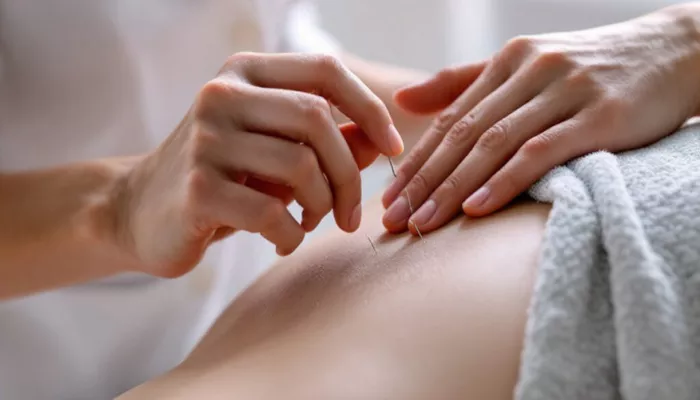
Real and sham acupuncture improved perceived cognitive function in breast cancer survivors compared with usual care, while real acupuncture showed additional benefits for objective cognitive performance, according to results from the ENHANCE phase II clinical trial presented at the San Antonio Breast Cancer Symposium (SABCS) December 9–12, 2025.
More than 40% of breast cancer survivors experience “chemo-brain” or cancer-related cognitive difficulties, which can affect memory, attention, and daily functioning. Jun J. Mao, MD, MSCE, chief of integrative medicine at Memorial Sloan Kettering Cancer Center, noted, “Cancer-related cognitive difficulties can make performing daily tasks more difficult and can reduce overall quality of life. Unfortunately, there are very few evidence-backed treatments for this problem.”
Previous research by Mao’s team linked insomnia to cognitive difficulties in over 1,000 breast cancer survivors. Their earlier trial suggested acupuncture could improve insomnia and potentially cognitive function, compared with cognitive behavioral therapy for insomnia (CBT-I).
To further investigate, the ENHANCE trial enrolled 260 women with stage 0–3 breast cancer who had completed treatment, were cancer-free, and reported moderate or greater cognitive difficulties and insomnia. Participants were randomly assigned to receive real acupuncture (129), sham acupuncture (70), or usual care (61). Treatments were delivered weekly for 10 weeks, with cognitive assessments at baseline, 10 weeks, and 26 weeks.
Sham acupuncture mimics the acupuncture experience without targeting traditional points or penetrating the skin. “Acupuncture should be seen as a complex intervention,” Mao said. “The relaxation, personal attention, and care during treatment can provide therapeutic benefits even if the needles are not inserted or placed at classic points.”
Perceived cognitive function was measured using the Functional Assessment of Cancer Therapy-Cognitive Function (FACT-Cog PCI), a patient-reported survey. Objective function was assessed with the Hopkins Verbal Learning Test-Revised (HVLT), which tests memory, learning, and attention. Mao emphasized that perceived and objective cognition often do not align: only 30% of participants met criteria for objective impairment despite reporting moderate to severe cognitive difficulties.
After 10 weeks, both real and sham acupuncture produced clinically meaningful improvements in perceived cognitive function: FACT-Cog PCI scores increased by 10.3 points and 10.5 points, respectively, compared with 4.8 points in the usual care group. Real acupuncture showed a twofold improvement over usual care at 10 and 26 weeks, though differences between real and sham acupuncture were not statistically significant.
The similarity in perceived benefit suggests that aspects of the acupuncture experience, such as relaxation and attention, may play a role. Real acupuncture, however, significantly improved HVLT scores compared with sham acupuncture, particularly among participants with baseline objective impairment, indicating a potential effect on memory and learning.
Adverse events were mostly mild and limited to real acupuncture, with bruising occurring in 3.1% of participants. The study also reinforced the link between sleep disturbance and cognitive performance: insomnia and sleep fragmentation were associated with worse objective cognition.
Mao concluded, “Cognitive difficulties in breast cancer survivors are complex. While the improvements in perceived cognition may be largely due to the care experience, real acupuncture shows potential for objective cognitive benefit, particularly in those with baseline impairment. Women may consider trying acupuncture to improve their sense of cognitive function, but larger trials are needed to confirm its effects on objective cognition.”
Study limitations include the small number of participants with objective cognitive impairment, the single-center urban setting, and restriction to female breast cancer survivors, which may limit generalizability. The trial also took place during the COVID-19 pandemic, which could have influenced stress and cognitive outcomes.
Related topic:
