
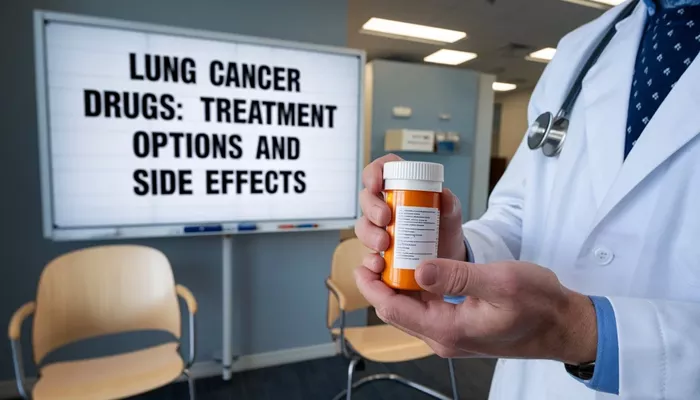
The US Food and Drug Administration (FDA) has granted accelerated approval for sevabertinib, an oral drug for adults with non-squamous, non-small-cell lung cancer (NSCLC) carrying specific gene mutations.
The approval follows early-phase clinical trials conducted worldwide, including at Singapore’s National Cancer Centre (NCCS), showing the drug can shrink tumours in patients whose cancer did not respond to prior treatments.
Sevabertinib targets mutations in the HER2 gene, which can keep cells permanently “switched on,” driving rapid tumour growth. HER2 mutations occur in 1–3% of NSCLC cases in the US and Europe and 1.4–6.7% in Asia.
The twice-daily oral treatment received FDA approval in November before Phase 3 trials, allowing patients with locally advanced or metastatic cancer—who had undergone chemotherapy or targeted therapy—earlier access to the drug.
Marketed by Bayer as Hyrnuo, sevabertinib showed promising results. Among patients without prior HER2-targeted therapy, tumours shrank in 71% of cases, with effects lasting around nine months. Over half of these patients maintained tumour reduction for at least six months. In patients with previous HER2 therapy, tumours shrank in 38% of cases, typically lasting seven months, with over half keeping tumours smaller for at least five months.
“More importantly, the safety profile was manageable, with most patients able to continue treatment,” said Professor Daniel Tan, head of the Clinical Trials and Epidemiological Sciences Division at NCCS, who led the Singapore study. Only 3% of patients stopped treatment due to adverse effects, while serious side effects—most commonly diarrhoea—occurred in 31% of patients.
The clinical trial results were published in the New England Journal of Medicine on October 17. NCCS recruited 209 patients for the study.
“During this trial, we could provide patients with effective oral HER2-targeted therapy. This gives us hope for improving outcomes in a patient population that has been challenging to treat,” Prof Tan said.
Lung cancer remains the deadliest cancer globally, causing approximately 1.8 million deaths annually, primarily linked to smoking. However, in Singapore, half of lung cancer patients have never smoked, and a disproportionate number of female non-smokers are diagnosed with NSCLC.
A 2022 lung cancer screening study in Singapore detected cancerous nodules in nine of over 530 participants, all non-smokers with Stage 1 lung cancer.
Prof Tan noted that Phase 3 trials for sevabertinib are still required for full FDA approval. He also highlighted that not all new cancer drugs are included in Singapore’s Cancer Drug List, which covers outpatient treatments partially claimable through MediShield Life or MediSave. The list is updated regularly as new treatments are reviewed.
Related topic:
