
Roche (RHHBY) reported positive results from a pre-specified interim analysis of its late-stage breast cancer study, highlighting the potential of its investigational oral drug giredestrant, a next-generation selective estrogen receptor degrader (SERD) and full antagonist.
Last month, Roche announced that the phase III lidERA Breast Cancer study met its primary endpoint of invasive disease-free survival (iDFS), showing a statistically significant improvement with giredestrant over standard-of-care endocrine therapy (SoC ET). The company had not disclosed the magnitude of the benefit at that time.
In the latest update, Roche revealed that giredestrant reduced the risk of invasive disease recurrence or death by 30% compared with SoC ET. Following the news, RHHBY shares rose 3.6% on Wednesday.
Details of the lidERA Study
The lidERA study involves roughly 4,100 patients with medium- or high-risk stage I-III ER-positive, HER2-negative breast cancer. At three years, 92.4% of patients receiving giredestrant were alive and free of invasive disease, compared to 89.6% on standard therapy. The iDFS benefit was consistent across all key subgroups.
While overall survival data remain immature, the analysis showed a positive trend. Giredestrant also reduced the risk of distant recurrence by 31%, reinforcing its potential clinical impact. Safety outcomes were manageable and aligned with previous data, supporting the drug’s viability as a next-generation endocrine therapy.
Roche shares have climbed 41.7% over the past year, outperforming the industry growth of 7.2%.
Addressing a Key Need in Breast Cancer
ER-positive breast cancer accounts for approximately 70% of cases, most detected early. However, up to a third of patients still experience recurrence despite adjuvant endocrine therapy, and many discontinue treatment early due to tolerability issues, increasing mortality risk. Giredestrant addresses these challenges by offering an effective, oral therapy that may improve adherence and outcomes.
Giredestrant is the first oral SERD to demonstrate superior iDFS in the adjuvant setting. The lidERA study marks its second positive phase III outcome following the evERA study in metastatic breast cancer. Previous neoadjuvant studies, such as coopERA, showed stronger suppression of tumor cell proliferation compared to aromatase inhibitors, further supporting its efficacy.
Roche’s Breast Cancer Portfolio
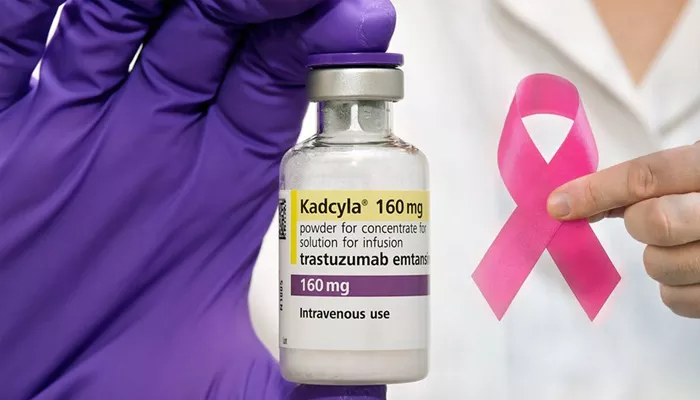
Roche’s breast cancer franchise includes Herceptin, Perjeta, and Kadcyla. While Herceptin faces biosimilar competition, Kadcyla is performing well due to demand from patients with residual disease post-surgery. The Phesgo fixed-dose combination of Perjeta and Herceptin has strengthened the portfolio further.
The approval of inavolisib (Itovebi) for endocrine-resistant, PIK3CA-mutated, HR-positive, HER2-negative breast cancer adds to Roche’s expanding breast cancer offerings. Giredestrant is also being evaluated across five company-sponsored phase III studies covering multiple treatment settings.
Competitive Landscape
In September, the FDA approved Eli Lilly’s imlunestrant (Inluriyo) for adults with ER-positive, HER2-negative, ESR1-mutated advanced or metastatic breast cancer after progression on at least one line of endocrine therapy. Lilly is also testing the drug in combination with Verzenio (abemaciclib) for advanced and early-stage breast cancer.
Related topic:
