
For many adults, starting a family doesn’t always follow the traditional sequence of marriage and parenthood. For Katharine Losavio, a 36-year-old healthcare administrator from Manhattan, this reality became urgent when she received a life-altering diagnosis just before her first wedding anniversary. Losavio was diagnosed with non-Hodgkin lymphoma, an aggressive cancer of the lymphatic system that, while more commonly diagnosed in adults over 65, can affect individuals of any age.
“I experienced severe, sharp abdominal pain and went to the emergency room,” Losavio said. Imaging revealed a 12-centimeter mass in her spleen, and a biopsy confirmed Stage 1 lymphoma.
Fertility Preservation Before Chemotherapy
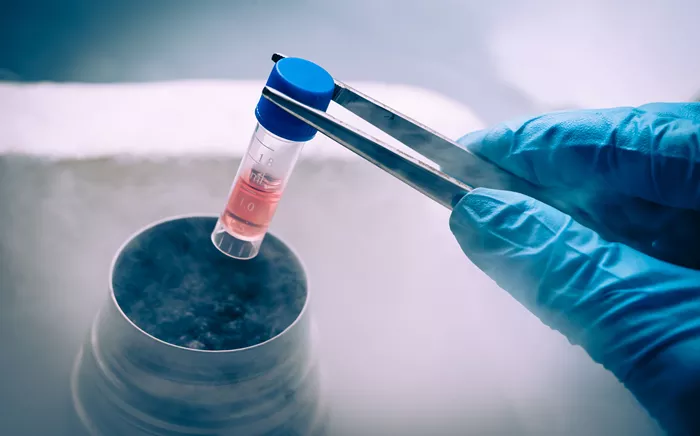
Facing chemotherapy, which can significantly reduce ovarian reserve and accelerate menopause, Losavio sought reproductive counseling. She met with Dr. Tomer Singer, Chief of Reproductive Endocrinology and Infertility at Northwell Health Fertility.
“Chemotherapy can damage or destroy eggs, and egg quality naturally declines with age,” Losavio explained. “I knew I wanted to do embryo freezing before starting treatment.”
Over the past decade, fertility preservation for cancer patients has increased, largely due to advancements in egg-freezing technology and broader recognition by professional medical organizations. In 2012, the American Society of Reproductive Medicine removed egg freezing from its list of experimental procedures, improving public awareness and insurance coverage.
Medical indications for egg freezing extend beyond cancer treatment. Conditions such as endometriosis, fibroids, ovarian cysts, blocked fallopian tubes, polycystic ovary syndrome (PCOS), and certain autoimmune disorders may compromise fertility. Genetic screening can also be performed to reduce the risk of passing on inheritable conditions, including BRCA mutations or Fragile X syndrome.
The Process: Hormone Stimulation and Egg Retrieval
Losavio’s oncologist determined there was sufficient time to complete a single fertility treatment cycle before chemotherapy. She underwent daily hormone injections and frequent ultrasounds and blood tests to stimulate egg production.
“Thirty-two eggs were retrieved and fertilized with my husband’s sperm,” Losavio said. “Sixteen embryos were created, and after genetic testing, eight viable embryos were frozen.”
Dr. Singer noted that egg and embryo survival rates exceed 90% in high-quality IVF labs for patients under 35, though rare complications such as thawing failure can occur. Importantly, studies show that ovarian stimulation does not increase cancer progression, allowing most patients to safely delay chemotherapy for 8–14 days.
Managing Timing and Future Family Planning
Two days after her egg retrieval, Losavio began chemotherapy, which she completed over several months. By August, she was declared in remission. Physicians recommend waiting at least two years post-remission before attempting conception due to relapse risk.
Dr. Singer emphasized the importance of consent and planning for stored eggs or embryos. Patients may choose to discard, donate, or preserve eggs and embryos for future use, highlighting the ethical and practical considerations in fertility preservation.
Financial considerations remain significant. At Northwell Health, a medical egg-freezing cycle can cost several thousand dollars, with medication costs adding up to $5,000 and annual storage fees ranging from $350 to $1,200. Some patients may be unable to pursue egg freezing due to medical clearance or financial barriers, though alternatives such as egg donation or surrogacy are available.
Related topics
