
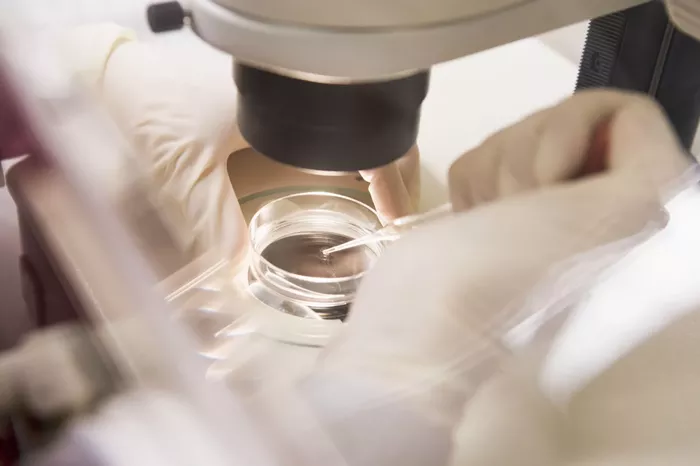
Researchers at Barcelona’s Centre for Genomic Regulation (CRG), led by Dr. Elvan Böke, have unveiled new insights into how human egg cells, or oocytes, can remain intact and viable for decades. Fresh oocyte samples—more than one hundred in total—revealed a survival strategy that hinges on dramatically reducing internal energy use, maintaining essential cleaning systems at a minimal pace, and discarding waste components at just the right time.
The Longevity Puzzle of Human Egg Cells
Women are born with approximately one to two million oocytes, yet most of these never mature. Only a few hundred will ultimately ovulate. Maintaining these cells in pristine condition for decades presents a biological challenge: normal metabolic activity continuously generates reactive oxygen species (ROS) and other cellular debris that can damage DNA, proteins, and membranes.
In most cells, lysosomes (responsible for breaking down cellular waste) and proteasomes (which degrade old or misfolded proteins) are active workhorses, burning energy and potentially producing ROS. But this level of activity risks harming the long-lasting oocytes.
Running on “Eco Mode”: Metabolic Downshift
Dr. Böke’s team used fluorescent probes in live oocytes to measure lysosomal, proteasomal, and mitochondrial activity. Compared to supporting cumulus cells, oocytes showed roughly 50% less activity across all fronts. This widespread “power down” helps oocytes maintain cellular integrity with minimal energy—forgoing high-speed cleanup that risks ROS accumulation.
“We found a surprisingly minimalist strategy that helps the cells stay pristine for many years,” explained Dr. Böke. By slowing these systems, human egg cells can sustain themselves without incurring gradual damage.
Implications for IVF Protocols
Approximately 2.6 million in vitro fertilization (IVF) cycles are conducted annually, resulting in over half a million live births. Egg quality remains a primary barrier to IVF success. Historically, culture media for egg maturation have emphasized metabolic stimulation—antioxidants and metabolic boosters aimed at “revving up” the egg.
However, Dr. Böke’s findings suggest that success may instead come from preserving the oocyte’s natural inertia. Rather than accelerating metabolic activity, IVF treatments might benefit from:
- Gently formulated culture media that maintain low energy states.
- Timed exposure protocols to avoid premature power-up.
- Additives that block non-essential proteasome action or buffer ROS without increasing respiratory activity.
Such strategies could more closely mimic the egg’s in vivo resting state and enhance viability. But caution is warranted: too little cleanup can be as harmful as too much. Clinical trials will be essential to determine ideal balances for oocyte health and embryo development.
Conclusion
This groundbreaking study reveals that human oocytes are not idle storage vessels but rather purposefully energy-efficient guardians. Through a combination of metabolic throttling, selective waste ejection, and reduced ROS production, eggs sustain reproductive potential for decades. Translating these insights into IVF and fertility preservation holds promise—but also demands precision to ensure eggs are neither under-maintained nor over-stimulated.
As research continues, the hope is that fertility medicine will evolve from “fine-tuned acceleration” toward “smart economy mode”—leveraging the egg’s natural strategy to support healthier outcomes and lasting fertility.
READ MORE
Nearly 50% of Black women’s labour concerns in UK maternity wards unheard
Can You Get Pregnant After Menopause With Donor Eggs?
NHS faces staggering £27bn maternity negligence bill amid care scandals
