
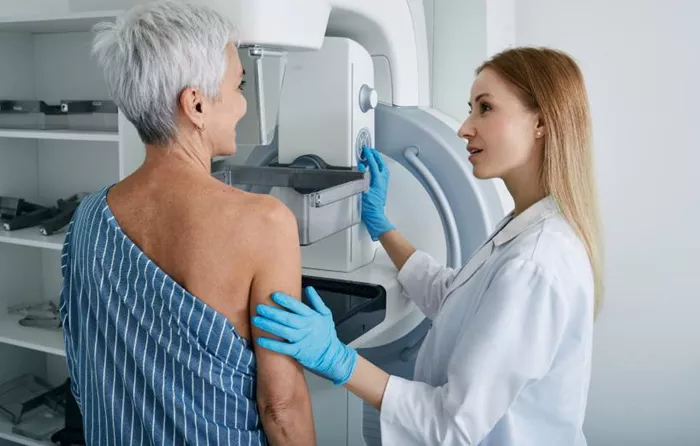
Mammograms remain the only screening test proven to reduce deaths from breast cancer in average-risk women, according to the Centers for Disease Control and Prevention. Yet, about 75% of eligible U.S. women schedule regular screenings, a figure from a recent JAMA study. Misunderstandings about who needs screenings and how often may contribute to missed mammograms.
Claim 1: Only Women with Family History Need Screening
All women should have regular screenings. Only about five to 10% of breast cancers are hereditary, so most cancers occur in women without a family history.
Claim 2: A Lump Is the Earliest Sign
A lump is a common symptom but not the earliest or only sign. Mammography can detect early signs such as calcifications before a lump is palpable, and early detection is associated with better outcomes.
Claim 3: Breast Size Affects Risk
Breast size does not determine risk. An average-risk woman has about a 12% lifetime risk, with higher risk (over 20%) for women with significant risk factors. Breast density can affect imaging but is not the same as breast size.
Claim 4: Younger Women Do Not Need Mammograms
Screening recommendations vary by risk, but guidelines support starting at age 40 for average-risk women, with earlier and more intensive strategies for those with high risk, including genetic mutations or strong family histories.
Claim 5: A Negative Mammogram Means No Cancer
A negative result reduces, but does not eliminate, the possibility of cancer. Cancers can be missed on a single mammogram, and regular annual screenings are important to catch new developments.
Claim 6: Mammograms Are Risky Because of Radiation
The radiation risk from screening mammography is very small compared with the benefit of detecting cancer early. Lifetime risk of radiation-induced cancer is roughly 1 in 5,000.
Claim 7: There Are Safe Alternatives to Mammograms
No universal replacement for screening mammograms exists. Other tools like MRI or ultrasound can provide additional information but do not replace mammography as the primary screening modality.
Claim 8: Biopsies Spread Cancer
Biopsies are generally safe and essential for accurate diagnosis. The benefits of obtaining a tissue diagnosis far outweigh the small biopsy risks.
Current Statistics and Implications
Breast cancer remains the most common cancer in women after skin cancer and the second leading cause of cancer death. In 2024, over 300,000 women were diagnosed, and about 40,000 died. More than 3 million breast cancer survivors live in the U.S., underscoring the importance of effective early detection.
Key Takeaways for Clinicians and Patients
Regular, guideline-concordant screening improves outcomes for average-risk women. Discussions should personalize screening plans based on age, risk factors, breast density, and patient preferences. Clear communication about the benefits and limitations of mammography helps improve adherence and informed decision-making.
Public Health Context
Enhancing understanding of who should be screened and at what intervals is essential to increasing screening rates and reducing mortality from breast cancer.
Related topics
