
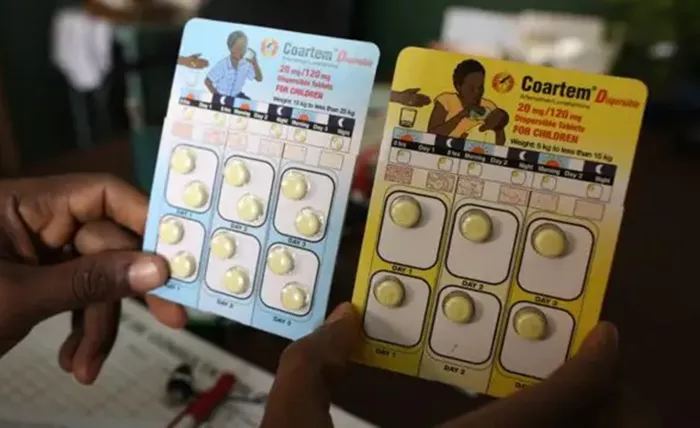
For the first time, newborn babies and underweight infants can receive an approved malaria treatment, thanks to a groundbreaking new drug developed in Switzerland. Swissmedic, the country’s health authority, has approved Coartem Baby—also known as Riamet Baby—for infants weighing between 4.4 and 11 pounds, addressing a critical gap in care for some of the world’s most vulnerable patients.
The medicine was jointly created by the nonprofit Medicines for Malaria Venture (MMV) and Swiss pharmaceutical giant Novartis. The announcement marks a milestone in global efforts to tackle malaria, a deadly yet preventable disease that disproportionately affects children under five—especially in sub-Saharan Africa.
According to the World Health Organization (WHO), there were 263 million malaria cases and nearly 600,000 deaths worldwide in 2023. An alarming 76% of malaria-related deaths in Africa occurred among children under five, highlighting the urgent need for infant-specific treatments.
“This is a significant step forward in the global fight against malaria,” Swissmedic stated. “The newly authorized product addresses a critical treatment gap for one of the most vulnerable patient populations—young infants.”
A Treatment Made for the Smallest Patients
Coartem Baby is a reformulated version of an existing combination of two antimalarial drugs—artemether and lumefantrine—already used to treat older children and adults. However, until now, no approved version existed for babies under 11 pounds, a group that includes many newborns and malnourished infants in malaria-endemic regions.
The newly approved formulation can dissolve easily in breast milk or water, and has a sweet cherry flavor to make it easier to administer to babies. This innovative design helps overcome treatment barriers, such as the need to crush pills or use hospital equipment like syringes.
Bhargavi Rao, co-director of the Malaria Center at the London School of Hygiene and Tropical Medicine, welcomed the news.
“This is a drug that can be mixed with breast milk, which is brilliant and much easier to deliver,” she said. “Even low levels of parasites can cause severe disease in very small children.”
Fast-Tracked Approval in Africa
Swissmedic approved the treatment under its Marketing Authorization for Global Health Products (MAGHP), which helps accelerate access to essential medicines in low-income countries. The approval was issued in cooperation with national health authorities in eight African nations: Burkina Faso, Ivory Coast, Kenya, Malawi, Mozambique, Nigeria, Uganda, and Tanzania.
Regulatory agencies in these countries are expected to authorize the drug’s use within 90 days of receiving the formal application, ensuring that babies in need can access the medication without unnecessary delays.
Novartis CEO Vas Narasimhan emphasized the company’s long-term commitment to fighting malaria, saying:
“We are proud to have developed the first clinically proven malaria treatment for newborns and young babies, ensuring even the smallest and most vulnerable can finally receive the care they deserve.”
The Bigger Picture: Ongoing Challenges in Malaria Prevention
While this new treatment fills a critical gap, challenges remain. WHO data shows that around 95% of global malaria cases and deaths still occur in Africa. Despite the availability of tools such as insecticide-treated nets and preventive medications, many communities lack access due to limited funding and healthcare infrastructure.
Vaccines are now available for children from five months old, delivered in four doses. As of April, 19 countries were rolling out these vaccines to meet strong demand. However, for babies younger than five months—or those who are malnourished and underweight—the vaccine is not yet an option, making Coartem Baby a lifesaving development.
Climate change adds another layer of complexity. Longer mosquito breeding seasons and growing populations are expected to increase the number of people at risk of malaria. By 2040, over five billion people could be affected globally, including one billion in Africa alone.
A Glimpse at the Future
Scientists are exploring cutting-edge solutions to combat malaria’s spread, including gene-editing mosquitoes to stop transmission altogether. However, ethical concerns remain, and experts urge caution.
In the meantime, practical solutions like Coartem Baby offer hope. By creating treatments designed specifically for the youngest and most at-risk patients, global health organizations can help close the gap in malaria care and move closer to eliminating the disease entirely.
Related topics:
U.S. Measles Cases Reach 25-Year High Amid Vaccine Decline
