
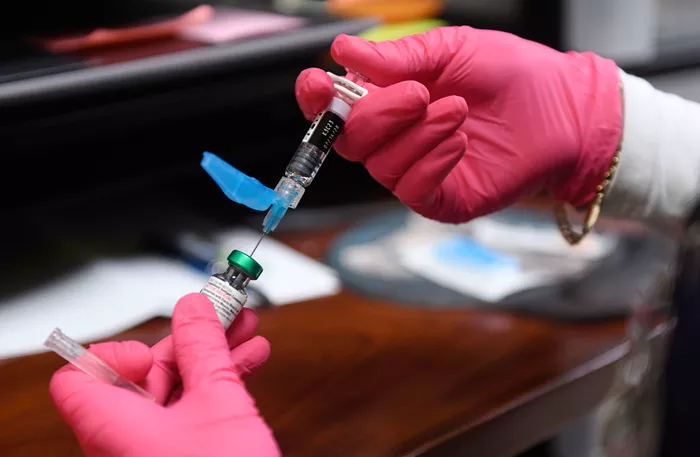
The United States is seeing its highest number of measles cases since the disease was declared eliminated in 2000 — a troubling signal of falling vaccination rates and rising public health risks.
So far in 2025, more than 1,277 cases of measles have been reported nationwide, according to an NBC News analysis of state health data. Tragically, the outbreak has already claimed the lives of two unvaccinated children in Texas and one adult in New Mexico — the first U.S. measles deaths in more than a decade.
Why Measles Is Resurfacing
Measles was declared eliminated in the U.S. in 2000, meaning the virus was no longer spreading continuously for 12 months or more. However, sporadic outbreaks still occur, often due to international travel or unvaccinated pockets of the population.
The largest outbreak in 2025 has occurred in a Mennonite community in West Texas, particularly Gaines County, where only 82% of kindergarteners were fully vaccinated in the 2023–2024 school year. This falls far short of the 95% coverage needed to prevent community spread.
More than 700 cases have been reported in Texas alone, contributing to the national surge. Smaller outbreaks have been detected in other states, typically following exposure abroad.
Low Immunization Rates Fuel the Surge
The national MMR (measles, mumps, and rubella) vaccination rate among kindergartners dropped to just under 93% in the latest school year. That’s down from 95% in 2019–2020 — a worrying trend that makes outbreaks harder to contain.
This echoes a 2019 outbreak in New York, which affected Orthodox Jewish communities with low vaccine coverage. That year, 1,274 measles cases were reported nationwide. New York authorities responded swiftly with a vaccine mandate and distributed over 60,000 doses, successfully containing the spread.
Experts Raise Concern Over Funding and Misinformation
Dr. David Sugerman, a senior scientist with the Centers for Disease Control and Prevention (CDC), said measles must continue spreading through January 20, 2026, for the U.S. to lose its elimination status.
However, public health responses face funding challenges. The CDC recently cut $11.4 billion in COVID-19 funds, which had helped state agencies handle outbreaks. Treating measles isn’t cheap — each case can cost $30,000 to $50,000, Sugerman noted.
Meanwhile, vaccine misinformation is on the rise. Despite publicly supporting measles vaccinations, Health and Human Services Secretary Robert F. Kennedy Jr. has made misleading claims about immunity and promoted unproven treatments like steroids and vitamin A.
Dr. Ana Montanez, a pediatrician in West Texas, called misinformation the greatest challenge facing health workers. “Some parents are giving their kids vitamin A instead of getting them vaccinated,” she said at an April press conference. While vitamin A may support recovery under medical supervision, it is not a cure for measles.
The Power of the MMR Vaccine
The MMR vaccine remains the most effective tool in preventing measles. Two doses are 97% effective and usually provide lifelong immunity.
The disease is particularly dangerous for infants and young children, whose immune systems are not yet fully developed. Texas health officials have responded by urging an early dose for infants aged 6 to 11 months, with follow-up shots scheduled appropriately.
Symptoms and Risks of Measles
Measles symptoms typically begin with:
- High fever
- Cough and runny nose
- Red or watery eyes
This is followed by:
- White spots inside the mouth (near the molars)
- A blotchy red rash spreading across the body
In severe cases, measles can lead to pneumonia or brain swelling (encephalitis). The CDC estimates that 1 to 3 out of every 1,000 children infected with measles will die from these complications.
Protecting Public Health
The current measles resurgence is a wake-up call for the U.S. health system and the public alike. With the disease once again threatening lives — especially among the unvaccinated — experts emphasize the urgent need for restoring trust in vaccines, investing in public health infrastructure, and combating misinformation.
Timely vaccinations and informed decisions remain the best defense against this highly contagious disease.
Related topics:
