
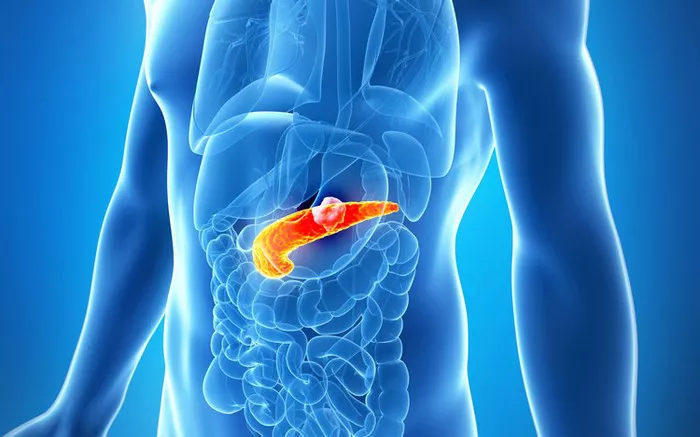
A team of Taiwanese researchers has developed PanMETAI, an artificial intelligence-powered platform capable of detecting pancreatic cancer at its earliest and most treatable stages using a standard blood sample, achieving diagnostic accuracy of up to 94%.
The Challenge of Early Detection
Pancreatic cancer remains one of the deadliest cancers globally, with a five-year survival rate of only 13%. Its subtle symptoms often result in late diagnoses, limiting treatment options. Conventional screening tools, including the blood marker CA19-9, have historically struggled with sensitivity and specificity, leaving a critical need for more reliable early detection methods.
How PanMETAI Works
The platform, developed through a collaboration between National Taiwan University Hospital and Academia Sinica, integrates nuclear magnetic resonance (NMR) metabolomics with advanced AI. NMR metabolomics captures the chemical fingerprint of hundreds of metabolites in a patient’s blood.
Using only 500 microliters of blood serum, PanMETAI extracts over 260,000 metabolic signals, which are analyzed through a cutting-edge tabular AI model called TabPFN. By combining these metabolic profiles with patient age, CA19-9 levels, and a protein biomarker called Activin A, the platform achieved an area under the curve (AUC) of 0.99 in a Taiwanese cohort, nearly perfectly distinguishing cancer patients from high-risk controls.
The system’s effectiveness was further validated in a Lithuanian cohort of 322 participants, maintaining strong performance with an AUC of 0.93, demonstrating its reliability across diverse populations.
Detecting Cancer at Its Earliest Stages
PanMETAI’s standout capability lies in early-stage detection (Stage I/II), a historically difficult milestone in pancreatic cancer diagnosis. The platform identifies subtle metabolic changes—such as reduced HDL cholesterol and glutamine, alongside elevated lactic acid, glucose, and glutamic acid—long before clinical symptoms appear.
Practical Implications for Healthcare
Remarkably, PanMETAI performs well even with small datasets. Tests showed stable accuracy around 90% with as few as 50 training cases, highlighting its potential for broad adoption in hospitals and research centers without large patient cohorts.
The research team envisions PanMETAI as a rapid, non-invasive, and cost-effective screening tool, capable of flagging high-risk patients for further evaluation and potentially saving lives through early intervention.
Expert Perspectives
Dr. Chun-Mei Hu, Assistant Research Fellow at Academia Sinica, emphasized the platform’s collaborative roots: “By combining clinical expertise, cancer biology, and advanced AI, PanMETAI bridges the gap between lab discovery and real-world diagnostics.”
Dr. Chao-Ping (Cherri) Hsu, Distinguished Research Fellow at Academia Sinica, highlighted the AI’s transformative potential: “Our work demonstrates that machine learning can navigate complex metabolic data and integrate it with essential clinical information, offering a viable path toward early cancer detection via standard blood tests.”
Professor Yu-Ting Chang of National Taiwan University concluded: “By merging AI with NMR metabolomics, we’ve created a tool capable of detecting pancreatic cancer when it is most treatable. Our goal is to bring this technology to clinical practice so more patients can benefit from timely diagnosis and intervention.”
