
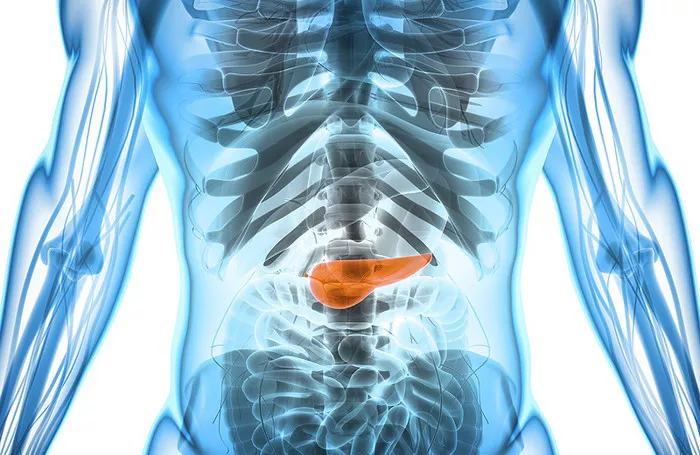
Pancreatic cancer remains one of the deadliest forms of cancer, with a five-year survival rate of just 13%. Most patients receive a diagnosis at an advanced stage, leaving limited treatment options and a challenging prognosis.
Dr. Neil Marya, assistant professor of medicine in the Division of Gastroenterology, director of the Program in Digital Medicine, and director of the Digital Medicine Fellowship, is leading a pioneering effort to change that. Alongside his team, Dr. Marya has introduced Endoscopic Ultrasound–Guided Radiofrequency Ablation (EUS-RFA) at UMass Memorial, a minimally invasive therapy designed to improve both quality of life and survival for patients with inoperable pancreatic cancer.
EUS-RFA uses a specialized needle connected to a generator to deliver targeted radiofrequency energy, burning away cancerous tissue while preserving surrounding healthy tissue. According to Dr. Marya, data from the University of Texas indicates that patients receiving this treatment have experienced extended survival, with some living several years longer than expected.
“Many of us have deep roots here and have worked together for years. This was a collaborative effort with everyone highly committed to developing a protocol and introducing this treatment for our pancreas cancer patients,” Dr. Marya said. “We’re the only hospital in New England offering this kind of minimally invasive, well-tolerated, and potentially transformative technology.”
UMass Memorial began enrolling patients for EUS-RFA treatment in September 2025, marking a significant step forward in pancreatic cancer care.
Dr. Marya and his team are being recognized for their innovative approach and dedication to advancing treatment options for patients facing this challenging diagnosis.
