
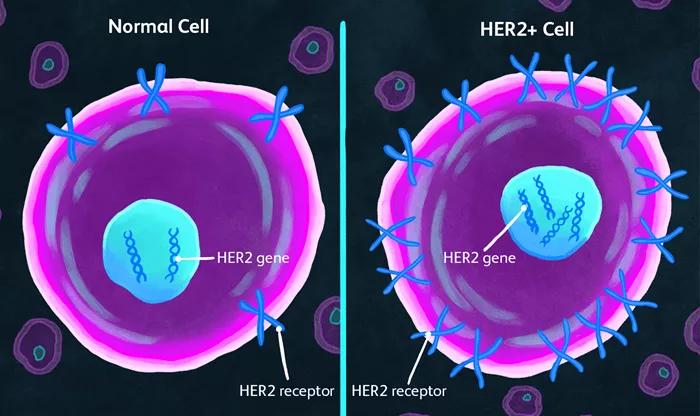
A new therapy for HER2-positive breast cancer is showing encouraging results in early clinical trials. The bispecific antibody-drug conjugate (ADC) TQB2102 demonstrated strong antitumor activity and a favorable safety profile in a recent phase 2 study, positioning it as a potential neoadjuvant treatment for patients with HER2-positive (HER2+) breast cancer.
The phase 2 TQB2102-II-01 trial (NCT06198751) enrolled patients into four separate treatment cohorts. Each cohort received a different dose of TQB2102 through intravenous infusion. Patients in cohorts 1 and 2 received 6.0 mg/kg every three weeks for six or eight cycles, respectively. Cohorts 3 and 4 received 7.5 mg/kg every three weeks for six or eight cycles.
Results showed that the therapy produced substantial tumor responses across all groups. The total pathologic complete response (tpCR) rates were highest in cohort 2, where patients received eight cycles of 6.0 mg/kg. In this group, 76.9% of patients achieved tpCR. The rates in the other cohorts were also noteworthy: 57.7% in cohort 1, 61.5% in cohort 3, and 69.2% in cohort 4. These findings suggest that TQB2102 may offer a significant clinical benefit for patients undergoing neoadjuvant treatment before surgery.
Safety data were equally encouraging. The therapy was generally well tolerated, with no treatment-related deaths reported.
The incidence of severe (grade ≥3) treatment-related adverse events ranged from 23.1% in cohort 1 to 30.8% in cohorts 2 and 3, with cohort 4 reporting 26.9%. Across all patients, the overall incidence of serious adverse events was 27.9%. Only one case of interstitial lung disease was reported, occurring in cohort 4.
Experts note that the high response rates, particularly in the eight-cycle 6.0 mg/kg regimen, are significant for HER2+ breast cancer patients. Neoadjuvant therapy aims to shrink tumors before surgery, improving surgical outcomes and reducing the risk of recurrence. An effective and safe ADC like TQB2102 could provide a valuable new option for patients who may not respond well to standard HER2-targeted therapies.
While these findings are preliminary, they offer hope for more effective treatment strategies in HER2-positive breast cancer.
The trial underscores the potential of TQB2102 to become part of the growing arsenal of targeted therapies that improve survival and quality of life for patients with this aggressive form of cancer.
Researchers plan further studies to confirm these results and to determine the optimal dosing strategy. If future trials replicate these positive outcomes, TQB2102 could become a key option in the treatment of HER2-positive breast cancer, offering patients a therapy that combines high efficacy with manageable side effects.
Related topics
