
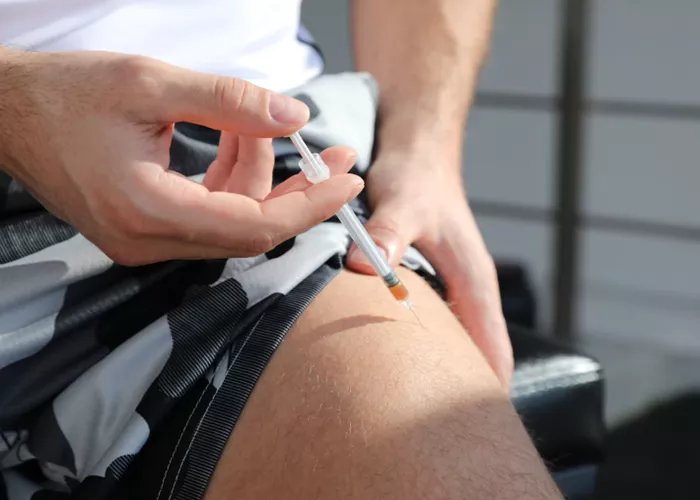
Scroll through social media, and you’ll see teenage boys and men in their early 20s debating testosterone. Some promote “testosterone maxxing”—boosting levels naturally through diet, exercise, or supplements. Others advocate testosterone replacement therapy (TRT) injections as a quick path to more energy, muscle growth, or confidence. Online, it can seem like a modern health crisis: a generation convinced their hormones are failing.
There is some truth to this. Research shows average testosterone levels have declined in men of all ages over the past two decades. “We’re less active, eat more processed foods, and face higher stress. All these factors contribute to lower testosterone levels in young people,” says Justin Houman, urologist at Cedars-Sinai Medical Center.
But the reality is more nuanced. Despite these declines, most young men remain within healthy ranges. Still, social media hype drives some to start TRT prematurely, risking permanent disruption of their endocrine system. Experts urge caution before considering treatment.
Who Needs TRT
Since the 1950s, TRT has been reserved for specific medical cases. “It was for men with testicular cancer who lost one or both testicles or those with congenital hypogonadism who never produced enough testosterone,” says Greg Novacheck, partner at Live Forever Health, a telehealth clinic specializing in testosterone optimization.
Later research showing that testosterone naturally declines by 1–2% per year after age 30 expanded TRT’s use for age-related drops. For men under 30, the need is far less common. While the National Cancer Institute estimates 20% of men aged 15–39 have low testosterone, that figure includes teens and men approaching 40. Houman estimates true deficiency in younger adults at closer to 10–15%.
Medically supervised TRT is not controversial. The American Urological Association (AUA) notes that testosterone below 300 nanograms per deciliter (ng/dL) can negatively affect cardiovascular and mental health, energy, cognitive function, and bone density. When necessary, treatment aims to restore levels to mid-normal—roughly 450–600 ng/dL—where symptoms improve without exceeding typical physiological levels. For those who need it, benefits can include better mood, sexual function, energy, and overall quality of life.
Why Young Men Seek TRT
Social media content increasingly frames TRT as a performance enhancer rather than a medical treatment. Influencers claim it improves energy, sexual performance, and gym results. Novacheck says 22-year-olds often call his clinic asking for prescriptions simply because they feel tired. “That’s not the business we’re in,” he notes.
Doctors are also prescribing TRT more liberally. A 2017 study in Translational Andrology and Urology found prescriptions tripled over the past decade, even among men with normal testosterone. Up to 25% of patients start treatment without testing, and one-third of those tested don’t meet deficiency criteria, according to the AUA.
Related topic:
