
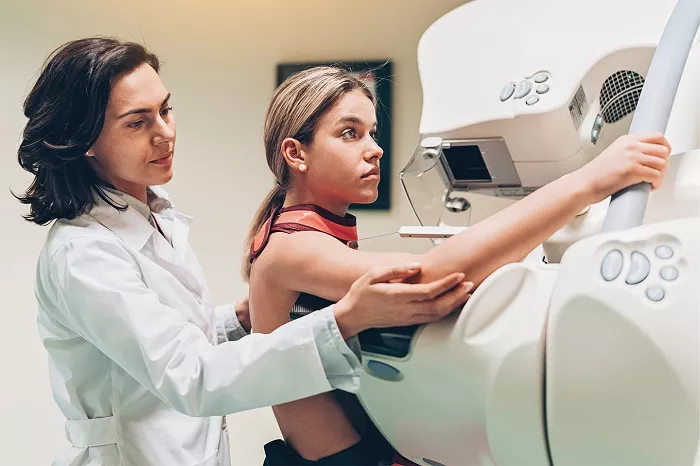
A new study has found that both patient and radiologist factors significantly affect the risk of developing breast cancers that appear between regular screenings. The findings, published November 25 in Radiology, emphasize how performance auditing and personalized strategies could improve breast cancer early screening outcomes.
The research, led by Dr. Melissa Min-Szu Yao of the Koo Foundation Sun Yat-Sen Cancer Center in Taipei, Taiwan, identified three main risk factors for interval cancers: high breast density, a family history of breast cancer, and lower radiologist performance scores. Interval cancers are tumors that develop after a normal screening result but before the next scheduled exam.
“Performance auditing and targeted strategies are essential to enhance early cancer detection in population screening,” Yao’s team wrote.
The study analyzed data from over 2.8 million women in Taiwan, with a total of 6.6 million mammography exams conducted between 2004 and 2018. On average, the women were 56 years old. Among them, 10,944 developed interval breast cancer during the study period.
Results showed that women with extremely dense breast tissue or a family history of breast cancer faced higher risk. Similarly, mammograms interpreted by radiologists with low audit scores—indicating suboptimal recall or cancer detection rates—were linked to a greater chance of interval cancer.
For example, women examined by radiologists with low recall and detection rates had 53.8% of their cancers missed at screening (p < 0.001). Asymmetry was the most frequent false-negative finding, accounting for 22% of missed interval cancers.
These discoveries suggest that radiologist performance and patient risk profiles should be analyzed together to improve screening precision. The authors proposed shifting from uniform population screening to risk-based strategies tailored to each woman’s profile.
Future studies, they added, should examine symptom tracking, evaluate additional imaging methods, and include long-term mortality data to enhance the evidence guiding breast cancer early screening.
Related topics
