
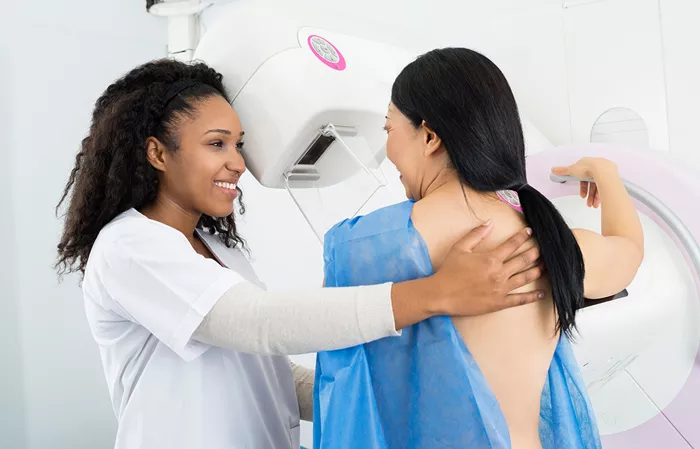
In the U.S., several medical organizations provide guidelines on using mammograms to screen for breast cancer. However, these guidelines differ on when women should start screening and how often they should be tested. This can make it confusing to know the “official” recommendations.
Mammogram Guidelines for Women at Average Risk
Experts generally advise that women at average risk start annual mammograms at age 40. This recommendation comes from the American College of Radiology, the Society of Breast Imaging, the American Society of Breast Surgeons, and the National Comprehensive Cancer Network.
However, some experts warn that yearly mammograms may increase costs, unnecessary tests, and false positives. A false positive occurs when a mammogram finds something suspicious, but follow-up tests show it is not cancer.
Due to this, some organizations suggest women should discuss the timing and frequency of mammograms with their doctors. For example, the U.S. Preventive Services Task Force (USPSTF) recommends mammograms every other year starting at age 40. Supporters of annual screening argue that yearly mammograms catch fast-growing cancers earlier, improving outcomes.
Mammogram Guidelines for Women at Higher Risk
Women with higher-than-average risk factors—such as family history or genetic mutations—should begin screening earlier. Experts recommend annual mammograms starting at age 30 and annual breast MRIs between ages 25 and 35, depending on individual risk.
Assessing Your Breast Cancer Risk
To know your risk, ask your primary care doctor or gynecologist for a risk assessment. Women, particularly Black women and those of Ashkenazi Jewish descent, should have this evaluation by age 25.
Women with dense breast tissue may need ultrasounds or breast MRIs in addition to mammograms. Dense tissue slightly increases breast cancer risk and can make it harder to detect cancer through mammograms alone.
Guidelines for Transgender and Nonbinary People
Transgender individuals with breast tissue have a higher breast cancer risk than cisgender men but lower than cisgender women. Mammogram recommendations vary:
Trans men or nonbinary individuals assigned female at birth (AFAB) should consider age, risk factors, and any chest surgery.
Trans women or nonbinary individuals assigned male at birth (AMAB) should consider age, hormone therapy, and other risk factors.
When screening is needed, transgender individuals should follow the same annual schedule as cisgender women.
Mammograms for Men at Higher Risk
Male breast cancer is rare, so regular mammograms are not recommended for most men. Men with BRCA1 or BRCA2 mutations or strong family history may benefit from yearly mammograms. Screening should start at age 50 or 10 years before the earliest family diagnosis, whichever comes first.
Screening After Breast Surgery
Double mastectomy: Mammograms usually not needed.
Single mastectomy: Mammograms for the remaining breast are recommended.
Lumpectomy: Annual mammograms are typically continued.
Screening After Age 74
Guidelines differ for people over 74. The American College of Radiology recommends yearly mammograms for healthy individuals without prior breast cancer. Others suggest discussing personal health and life expectancy with a doctor to decide whether to continue screening.
Conclusion
Consulting with a doctor is essential for personalized decisions about breast cancer screening. Factors like age, health, family history, and personal preferences all affect whether and how often mammograms should be done.
Related topics:
New Research Shows Estrogen Pills Enhance Fertility With Herbs
