
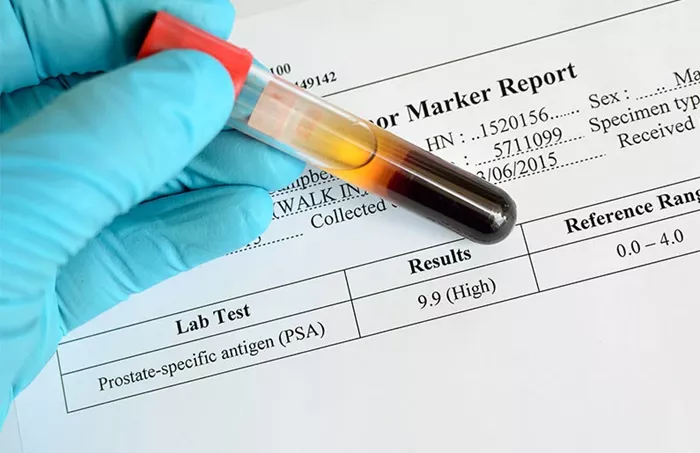
A landmark European study has confirmed that prostate-specific antigen (PSA) screening can significantly reduce deaths from prostate cancer over the long term. The European Randomized Study of Screening for Prostate Cancer (ERSPC) found that PSA testing leads to a 13% relative reduction in prostate cancer mortality 23 years after screening began.
This translates to one death prevented for every 456 men invited for screening, compared with men who were not offered testing. According to Anssi Auvinen, Professor of Epidemiology at Tampere University and one of the principal investigators, “Long-term follow-up demonstrates that PSA screening can substantially reduce deaths from prostate cancer. Yet the effect starts to wane once screening is discontinued and largely disappears within nine years.”
Gradual Increase in Screening Benefits Over Time
The study revealed that the absolute benefits of PSA screening improve with longer follow-up. After 16 years, one death was prevented for every 628 men invited, decreasing to one in 456 by the 23-year mark. Furthermore, among men diagnosed with prostate cancer, one life was saved for every 12 diagnosed cases. These findings underscore the importance of sustained screening programs for achieving maximal impact on mortality.
Risks and Limitations of PSA Screening
Despite its benefits, PSA screening is not without drawbacks. A key concern is the detection of clinically insignificant cancers, which may lead to overdiagnosis and overtreatment. Some prostate cancers grow so slowly that they remain asymptomatic throughout a man’s lifetime. Treating these low-risk cancers offers no survival advantage and may reduce quality of life due to side effects such as incontinence or erectile dysfunction.
Risk-Based Screening Improves Accuracy
The ERSPC findings also highlight the importance of risk-based approaches to screening. While initial PSA tests revealed elevated levels in 16% of participants, only 24% of these men were confirmed to have prostate cancer through biopsy. This indicates that many procedures may have been unnecessary.
Advances in imaging, such as magnetic resonance imaging (MRI), now help reduce overdiagnosis by better distinguishing aggressive cancers from indolent ones. “Risk-based screening would enable the identification of men who are at the highest risk of developing clinically significant prostate cancer,” Auvinen explains.
Large-Scale European Collaboration
More than 160,000 men from eight European countries participated in the ERSPC, with nearly half from Finland. Finnish institutions involved included Tampere University, Tampere University Hospital, the University of Helsinki, Helsinki University Hospital, and the Finnish Cancer Registry. The study was led by the Erasmus University Medical Center in Rotterdam, Netherlands.
Implications for Policy
Currently, Finland does not have a national prostate cancer screening program. However, these findings contribute to ongoing healthcare policy discussions, especially considering that prostate cancer is the most common cancer among men and the second-leading cause of cancer death in Finland, and the third-leading in Europe. The study reinforces the potential value of structured PSA screening in reducing mortality, particularly when combined with modern risk-based approaches.
Related topics
