
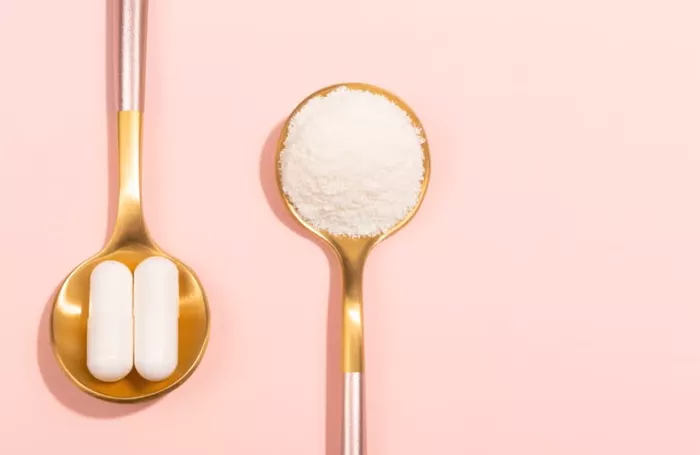
Collagen has quietly become one of America’s favorite health buzzwords. Once a niche ingredient in skincare creams, it’s now showing up in protein powders, energy bars, and even coffee creamers. Market analysts say U.S. sales of collagen products have been steadily climbing for years—and show no signs of slowing down.
But do collagen supplements actually deliver on their promises of smoother skin, stronger joints, and healthier hair? Experts say the answer is a bit more complicated. Here’s what science really says about collagen, what it does in your body, and whether you need more of it.
What Exactly Is Collagen?
Collagen is a structural protein—the body’s main building block for connective tissue. It provides strength and elasticity to your skin, bones, tendons, and ligaments.
“Collagen makes up about a third of all the protein in the human body,” explains Dr. Lina Begdache, PhD, RDN, a registered dietitian and associate professor at Binghamton University. “It’s what gives tissues their structure and resilience.”
Dr. Keith Erikson, PhD, a nutrition professor at the University of North Carolina Greensboro, likens collagen to rebar in construction. “Collagen is the rebar of the body,” he says—reinforcing and holding everything together.
Scientists have identified at least 28 types of collagen, but the most abundant is Type I, which is found in skin, bones, tendons, and ligaments.
The Role of Collagen in Skin, Bones, and Joints
Collagen is most famous for its role in skin health. It provides structure and elasticity, helping skin stay firm and hydrated. “We naturally begin to lose collagen in our 20s and 30s,” says Dr. Begdache, “but the effects become more noticeable after age 60.”
This loss isn’t limited to skin. Collagen also supports bone density and joint mobility, which is why aging is often accompanied by stiffness, slower healing, and more joint discomfort. Lower collagen levels can contribute to those changes.
How to Support Collagen Production Naturally
There’s no official guideline for daily collagen intake—and according to experts, most people don’t need to worry about it. As long as you’re meeting your overall protein requirements, your body can make the collagen it needs.
Collagen itself is found only in animal-based foods such as meat, fish, and bone broth. However, your body can also produce collagen using amino acids from plant-based proteins—provided you eat a balanced, high-quality diet.
Vitamin C is another essential player. “Vitamin C is part of the collagen matrix,” explains Drew Hays, RDN, a dietitian at the University of Texas at Austin. “Without enough of it, your body can’t synthesize collagen effectively.” Citrus fruits, bell peppers, strawberries, and tomatoes are excellent sources.
Do Collagen Supplements Actually Work?
Collagen powders and gummies are everywhere, often promising anti-aging benefits, stronger nails, and joint relief. But the research behind those claims is still limited—and often biased.
“There are studies suggesting benefits from collagen supplements,” Dr. Erikson notes, “but many are industry-funded or poorly controlled. When you look closely, the evidence doesn’t prove collagen supplements work better than simply eating enough protein.”
If You Still Want to Try a Collagen Supplement
If you decide to take a collagen supplement, be selective. Collagen typically comes in two forms:
Marine collagen, sourced from fish, contains mostly Type I collagen and may be slightly easier to absorb.
Bovine collagen, made from cows, contains Types I and III collagen, both beneficial for skin and joints.
Since supplements are not FDA-regulated, Dr. Erikson warns there’s potential for contamination, especially from heavy metals. “Look for products with a U.S. Pharmacopeia (USP) seal,” he advises. “That means the supplement has been independently tested for purity and accuracy.”
Conclusion
Collagen plays a vital role in maintaining healthy skin, bones, and joints—but most people can support their body’s collagen production naturally through a balanced diet. Supplements may not hurt, but for most, they’re unnecessary.
As Dr. Erikson sums it up: “There’s no solid evidence that collagen supplements outperform a well-rounded diet rich in protein and vitamin C. You don’t have to buy into the hype to stay healthy.”
Related topics
